


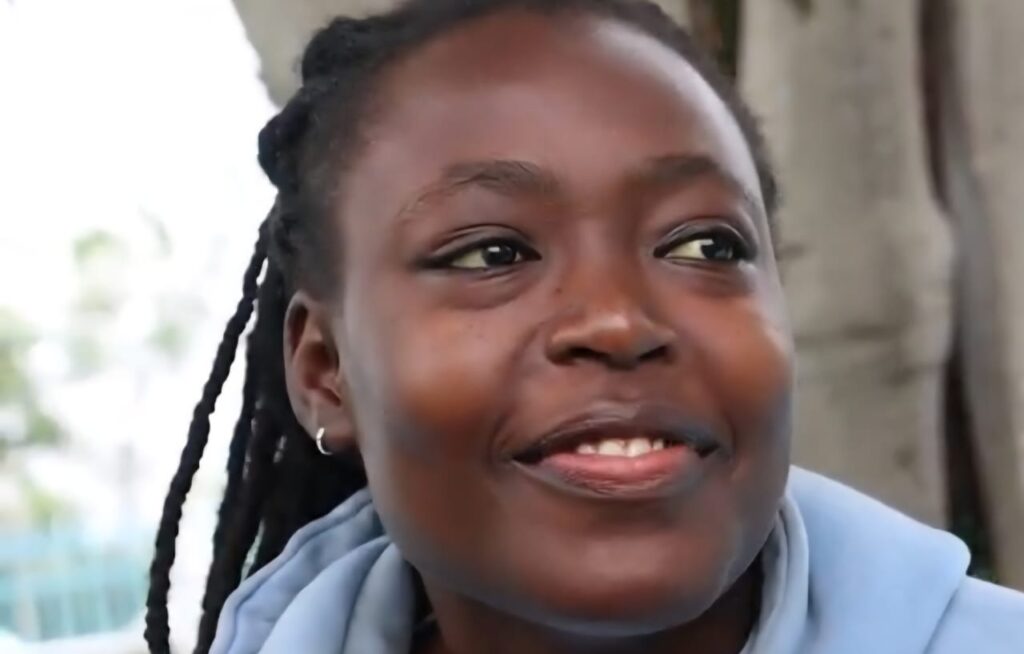
Anne-Linda Achieng’, lives with sickle cell disease in Kisumu.
In Kisumu County, 25-year-old Anne-Linda Achieng’ stitches dreams of becoming a fashion designer, even as her own life unravels in painful strands. Living with sickle cell disease, survival has been her daily battle.
“It was very difficult to access medication. My relative died because they couldn’t get drugs on time,” she says, her warm smile betraying the constant pain beneath.
Behind that smile lies a cruel truth: regular blood transfusions keep her alive, but these lifesaving interventions are often scarce. This year alone, the National Blood Transfusion Service faces a Sh3 billion shortfall, with the government setting aside just Sh300 million for equipment and services. For Anne-Linda and thousands like her, such gaps can mean the difference between life and death.
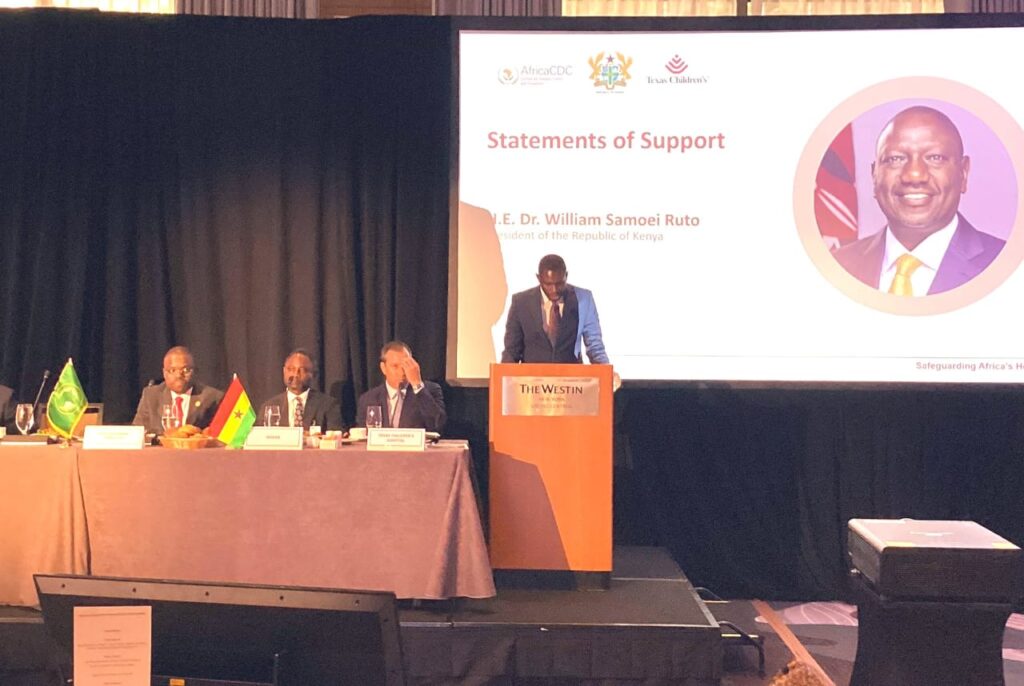
Principal Secretary for Medical Services Dr. Ouma Oluga at UNGA
It is against this backdrop that Kenya made a landmark announcement at the 80th United Nations General Assembly in New York. Representing President William Ruto, Principal Secretary for Medical Services Dr. Ouma Oluga declared that sickle cell screening will now be mandatory during routine maternal and child health visits.
“About 14,000 Kenyan children are born with sickle cell disease every year, and up to 90 percent die before the age of five. These are painful deaths, most of which are preventable,” Dr. Oluga told delegates.
He explained that the policy shift means every child will be tested as part of antenatal, delivery, and infant immunisation care, ensuring no newborn is left behind.
Kenya, he added, has already laid the groundwork through the National Guidelines for the Prevention and Management of Sickle Cell Disease (2021) and the Policy Guidelines for Infant Screening (2023). “These frameworks have institutionalised early detection and opened the door to lifesaving care,” he said.
Globally, an estimated 300,000 children are born with sickle cell disease every year, with more than 75 percent of cases in sub-Saharan Africa. In Kenya, the burden is heaviest in western, coastal, and Nyanza regions, where 50–90 percent of children born with the disease die before the age of five if not properly diagnosed and treated, according to the Ministry of Health and WHO.
Dr. Oluga said the new directive will build on these foundations:
“We have developed our first National Guidelines for the Prevention and Management of Sickle Cell Disease (2021) and the Policy Guidelines for Infant Screening (2023). These measures have institutionalised early detection and lifesaving interventions.”
With screening to be integrated into antenatal visits, deliveries, and infant immunisation, Kenya hopes to ensure no child slips through the cracks.
To support this, the government has created three new health funds the Primary Healthcare Fund, the Social Health Insurance Fund, and the Emergency, Chronic and Critical Illness Fund which, Dr. Oluga said, will “guarantee that sickle cell patients receive care without being driven into poverty.”
Yet, for patients like Anne-Linda, policies must go hand in hand with resources. Kenya’s health budget for 2025/26 has nearly doubled to Sh204 billion, but critical gaps remain. The Primary Healthcare Fund only received Sh13 billion of a required Sh61 billion, while the Emergency, Chronic and Critical Illness Fund was allocated Sh10 billion against a Sh107 billion requirement.
Advocates warn that these gaps could derail progress. Anne Mwende, head of advocacy at the Health NGO’s Network (HENNET), said:
“We need to ask ourselves how to increase domestic resources, both in national and county budgets, and who else we can engage including the private sector.”
She warned that without new financing models, critical services like blood transfusion, vaccine procurement, and maternal health will remain vulnerable to shortages.
For Anne-Linda, the UNGA announcement is more than a policy milestone, it is hope that the next generation of children born with sickle cell disease won’t have to walk the same painful path.
“Sometimes you go to the hospital, and they tell you drugs are out of stock. You just try to survive,” she says.
By embedding screening in routine maternal and child health visits, Kenya aims to slash under-five mortality linked to sickle cell and give thousands more children a chance to live beyond their first years.
