



Former Nairobi Governor Ann Kananu has sharply criticized the county administration under Governor Johnson Sakaja following the recent fire outbreak in Mlango Kubwa, Mathare, which left several families grappling with significant losses.
Kananu emphasized that life is sacred and must be protected at all costs, highlighting that every individual young or old, has an inherent right to life and property. She expressed deep concern that repeated fires in informal settlements reveal gaps in preparedness, response, and long-term planning.
“Nairobi residents deserve safety, dignity, and a governance system that prioritizes disaster prevention and swift emergency intervention,” Kananu said. “No family should be subjected to repeated trauma from avoidable fires that destroy homes, livelihoods, and sometimes even claim lives.”
The former county boss, urged the county leadership to bolster fire response units, invest in modern equipment, improve access roads in densely populated areas, and establish community-based disaster preparedness programs. She stressed that safeguarding life and property is a fundamental responsibility of any administration one that must never be compromised.
She called for immediate reforms to ensure that tragedies like the Mlango Kubwa fire do not recur, reminding leaders that Nairobians rely on their government for safety and accountability. “As leaders, our duty is to safeguard lives. Nairobians deserve better,” she concluded.
Nairobi’s Battle with Recurring Fires
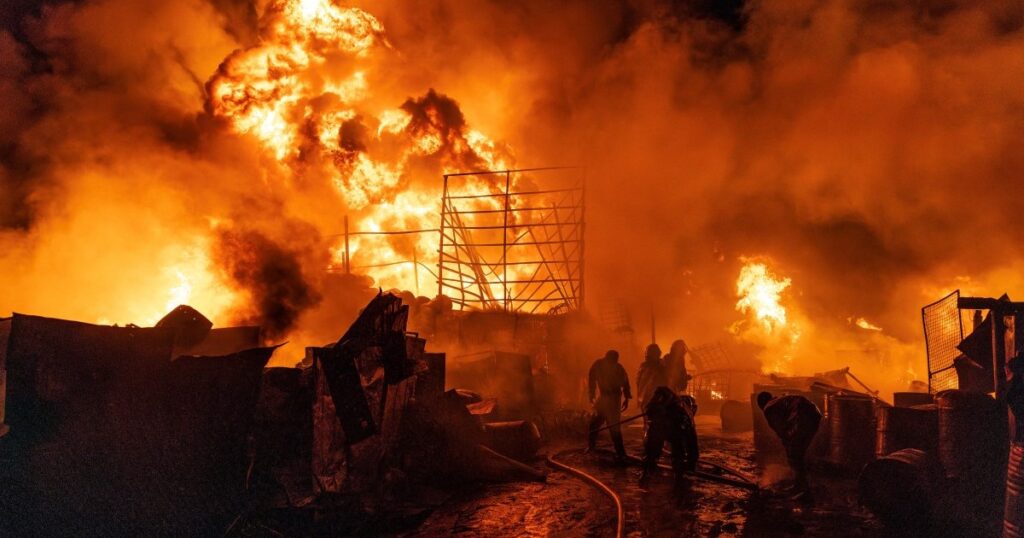
Since taking office in 2023, Governor Johnson Sakaja has faced mounting criticism over Nairobi’s escalating fire incidents, which have devastated homes, markets, and industrial areas across the city. From Kibera to Mathare, and Kariobangi to Westlands, recurring blazes have exposed deep vulnerabilities in urban safety, emergency preparedness, and infrastructure, leaving residents displaced, injured, and demanding urgent action.
One of the earliest major fires occurred in June 2023, when a blaze swept through a section of Toi Market in Kibera, destroying thousands of traders’ stalls and goods. At least four people, including a child, lost their lives. Residents expressed frustration over slow reconstruction and persistent fire risks, while the county government pledged support for rebuilding and upgrading market infrastructure.
In February 2024, a fire at a fuel station in Kariobangi left at least seven people injured, raising concerns about safety standards at industrial sites and the capacity of emergency services to respond to such incidents.
The problem intensified in 2025, with a series of destructive fires hitting different parts of the city. On February 23, a massive fire ravaged the Kariobangi Light Industries area, destroying bakeries, timber yards, garages, and residential buildings. At least 10 people were injured, and students lost classrooms in the blaze. Firefighters from Nairobi and neighboring counties battled the flames for hours amid strong winds and highly flammable materials.
Governor Sakaja revealed that January 2025 alone saw around 70 fire incidents, particularly in informal settlements like Mathare, where fires were reported almost every other day. Many were attributed to illegal electricity connections and gas explosions in congested neighbourhoods, highlighting ongoing vulnerabilities in city planning and public safety.
Later in the year, October 2025 saw a major fire in Waruku Estate, Westlands, which destroyed more than 75 homes and displaced dozens of families. Just weeks later, on November 20, another inferno consumed hundreds of makeshift homes in Mukuru Fuata Nyayo Village, Starehe, leaving families with virtually nothing.
Most recently, in December 2025, a large fire erupted in Mlango Kubwa, Mathare, prompting emergency deployments and raising concerns about the city’s ability to manage recurring disasters effectively.
These repeated incidents have underscored systemic issues, including illegal power connections, poor access for fire trucks, inadequate safety infrastructure, and overcrowded housing. Experts and residents alike have called for stronger preventative measures, better-resourced fire services, and community-based disaster preparedness programs.
As Nairobi continues to expand rapidly, these fire outbreaks reflect the urgent need for comprehensive urban planning and safety enforcement, emphasizing that protecting life and property remains a core responsibility of the county government.
