


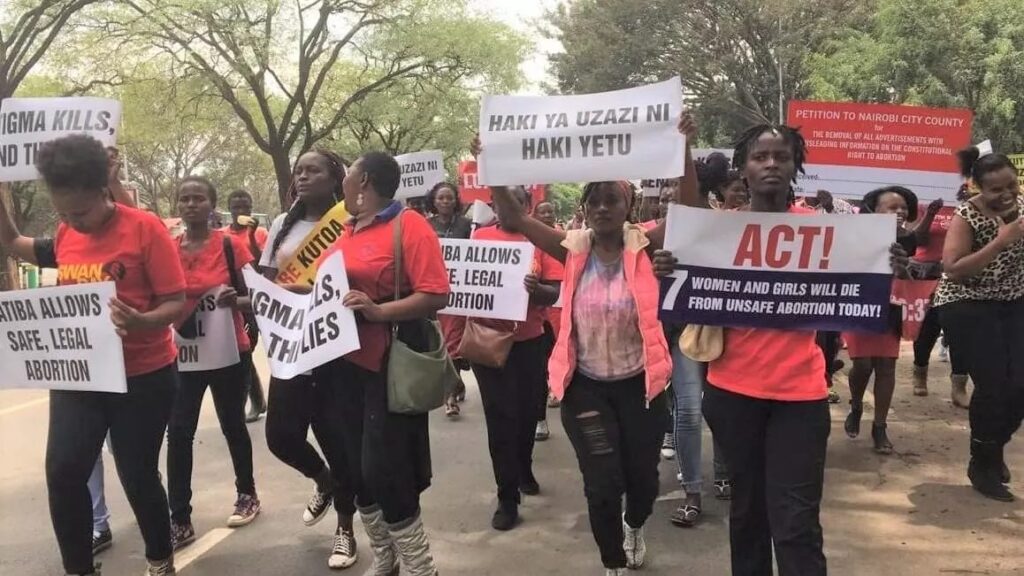
The High Court has overturned advertising restrictions imposed on Marie Stopes Kenya, concluding that the actions by regulatory authorities were unlawful.
In a judgment delivered in Nairobi on Thursday, Justice Chacha Mwita nullified directives issued by the Kenya Film Classification Board (KFCB) and the Kenya Medical Practitioners and Dentists Council (KMPDC), finding that both institutions acted outside their legal mandates.
In his ruling, Justice Mwita stated that “the Kenya Film Classification Board did not have the mandate to issue the directive of September 7, 2018, either under the Films and Stage Plays Act, the Kenya Information and Communications Act, or any other law.”
He noted that the respondents failed to point to any legal provision empowering the board to regulate health service advertising, adding that “the respondents were unable to identify any provision in the law that conferred on the Kenya Film Classification Board the authority to act as it did.”
He stated, “An order of certiorari is issued quashing the letter barring Marie Stopes Kenya from offering post-abortion care services.”
The court further found that the medical council had overstepped its authority by instituting disciplinary proceedings against a medical institution. Justice Mwita ruled that “the medical council had no power to conduct disciplinary proceedings against medical institutions, whether on its own or through its inquiry committee,” emphasizing that only individual practitioners fall within its disciplinary jurisdiction.
He added that “the proceedings against Marie Stopes Kenya were not supported by any law,” and that internal rules relied upon by the council could not override the limits set by Parliament. As a result, “the proceedings before the inquiry committee and its subsequent decisions were not based on any law and were therefore ultra vires (done beyond one’s legal power or authority).”
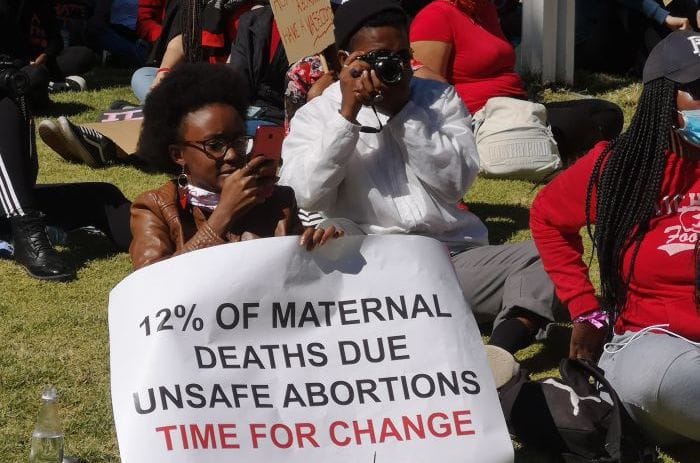
The ruling clears the way for Marie Stopes Kenya to resume public communication on safe abortion services and post-abortion care. Health advocates say access to accurate and timely information plays a critical role in preventing injuries and deaths linked to unsafe procedures, particularly in low-resource settings.
According to Martin Onyango, Associate Director, Africa Legal Strategies, Center for Reproductive Rights , the ruling is a game changer in women access to reproductive health services: “The Court has sent a strong message that state agencies cannot misrepresent the law or block lawful abortion services. This ruling protects both health workers providing care and women seeking it and brings much-needed clarity to Kenya’s constitutional framework.”
The ruling followed a petition filed in November 2018 by the Network for Adolescents and Youth of Africa (NAYA–Kenya) and Jackline Mary Karanja, who were represented by the Center for Reproductive Rights.
The petition challenged the bans, arguing that they denied women, girls, and young people access to lawful sexual and reproductive health information and services.
The court also set aside a directive that had compelled the organisation to refer all post-abortion patients to other hospitals. Critics of the requirement had warned it risked delaying urgent medical care for women experiencing complications.
In addressing this aspect, the judge issued “an order of certiorari quashing the letter barring Marie Stopes Kenya from offering post-abortion care services,” effectively restoring the provider’s ability to deliver comprehensive care.
Timothy Thondu, Legal Adviser, Center for Reproductive Rights also weighed into the ruling , he said,
“The Court’s decision is an affirmative recognition that unlawful regulatory overreach cannot be used to undermine access to lawful health services. By quashing these decisions, the High Court has upheld constitutional accountability and protected institutions and practitioners from arbitrary and unlawful action. 7 years is a long time to wait, but finally, this matter is settled.”
Legal and Policy Context
Kenya’s abortion laws remain restrictive. Under the 2010 Constitution and the Health Act of 2017, termination of pregnancy is permitted only when a trained health professional determines that a woman’s life or health is at risk, or in emergency situations. Despite these legal allowances, abortion services and information have remained a source of prolonged legal, political, and moral contestation.
In 2018, the medical council ordered Marie Stopes to halt all abortion-related services, including post-abortion care, citing concerns over legal compliance. The move triggered widespread opposition from civil society groups, who argued it endangered women’s lives by discouraging them from seeking medical help. The ban was later lifted after a government audit found the facilities met required standards.
However, disputes over how abortion information should be shared with the public persisted, culminating in the legal challenge over advertising that has now been settled by the High Court.
In his ruling, Justice Mwita also faulted actions taken by the Office of the Director of Medical Services, noting that the office ceased to exist following health sector reforms.
“The Office of the Director of Medical Services ceased to exist with the introduction of the Health Act, which established the Office of the Director General of Health,” he said. Consequently, “the Director of Medical Services could not lawfully issue the letter dated November 30, 2018, as it originated from a non-existent office and a non-existent officer.”
Health experts warn that restricting access to reproductive health information contributes to unsafe abortions, which remain a serious public health concern in Kenya. Studies consistently show that thousands of women suffer severe complications each year, with some cases resulting in death, largely due to unsafe and unregulated procedures.
The ruling aligns with a broader judicial trend emphasizing the primacy of women’s health and constitutional rights in reproductive health policy. In October 2025, the High Court declared unconstitutional a clause in the National Reproductive Health Policy that would have prioritized foetal health over the life and wellbeing of women, reaffirming that reproductive health policy must align with constitutional protections.
Summing up his decision, Justice Mwita declared that “the directive issued by the Kenya Film Classification Board on September 7, 2018 banning advertisements by Marie Stopes Kenya on reproductive health services was made without authority and is therefore unconstitutional and unlawful.” He similarly ruled that the KMPDC inquiry decision was “unconstitutional, illegal, null and void.”
