


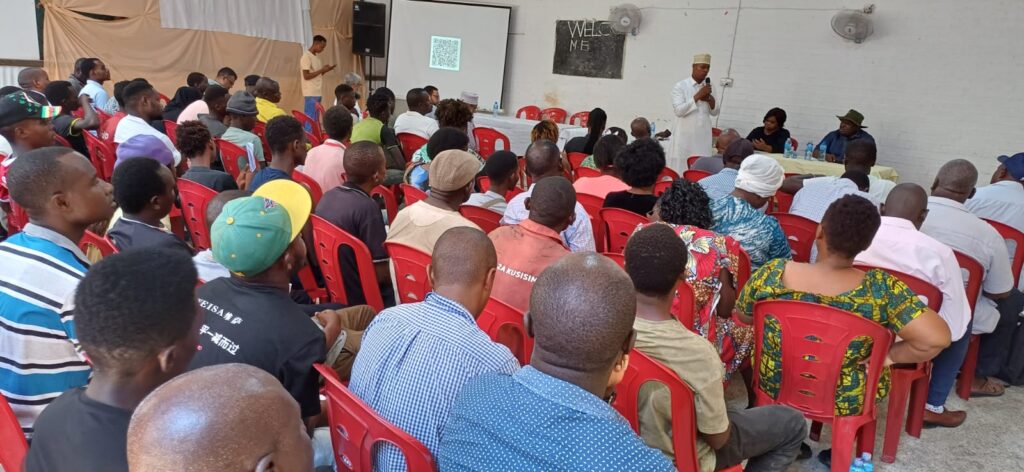
Public participation on the proposed National Automotive Industry Development Bill, 2025, took place in Mombasa on Wednesday, with stakeholders expressing differing views on the future of Kenya’s automotive sector.
The consultations follow similar engagements in Kisumu County, as the government seeks public input before the Bill, spearheaded by the State Department of Industrialization, is presented to Parliament.
The proposed legislation aims to strengthen the local automotive industry, including measures to reduce reliance on imported used vehicles and phase out scrap vehicles, restricting their use to spare parts.
Supporters said the Bill is designed to drive industrial growth, create jobs, and enhance long-term economic independence. Antony Musyoki, Chairperson of the automotive sector at the Kenya Association of Manufacturers, said the Bill would significantly boost the industry.
The legislation proposes establishing a council to advise the Cabinet Secretary on automotive matters, develop regulations, ensure compliance with standards, and attract investors.
“The council will play a key role in positioning Kenya as a regional manufacturing hub,” Musyoki said, noting that the country currently assembles about 14,000 vehicles annually. He argued that the Bill could increase production to over 20,000 units per year.
“This Bill is good because it will set up a council to guide policies supporting industry development, and part of their work will be sourcing investors to the country,” he added.
Musyoki cited South Africa and Morocco, which assemble around 600,000 vehicles annually and export nearly half of their production, as benchmarks for Kenya.
“We are not aiming for vehicle assembly for Kenya alone. Our goal is for Kenya to become a major hub alongside countries like Morocco and South Africa, which produce up to 600,000 units a year, with 300,000 sold globally,” he said.
Musyoki emphasized that the Bill is not intended to restrict used vehicle imports but to build a robust automotive industry, expand employment, and promote economic self-reliance through local manufacturing and exports.
“The government is not interfering with the importation of used vehicles. The Bill is about building the industry and organically growing vehicle assembly. Kenyans will still need second-hand vehicles due to economic realities,” Musyoki clarified.
However, the proposals faced opposition from car importers. Peter Otieno, National Chairperson of the Car Importers Association of Kenya, argued that the Bill was drafted without adequate consultation.
“We are here to object because we were not consulted during the drafting process. The Bill is not all-inclusive,” Otieno said.
He warned that restricting vehicle imports could reduce consumer choices, raise prices, and make car ownership unaffordable for many Kenyans. Otieno also claimed that some local assemblers driving the Bill feared competition from used vehicle importers.
“The commonly used vehicles in this country are very pocket-friendly. Returning to local assembly without options will mean higher prices, and only a few people will afford cars,” he said.
Public participation on the Bill is expected to continue across the country before it is debated in Parliament.
