


Cross-border collaboration to disrupt transnational wildlife crime syndicates is being intensified as the government moves to set up a National Wildlife Forensics and Intelligence Centre, Deputy President Kithure Kindiki has said.
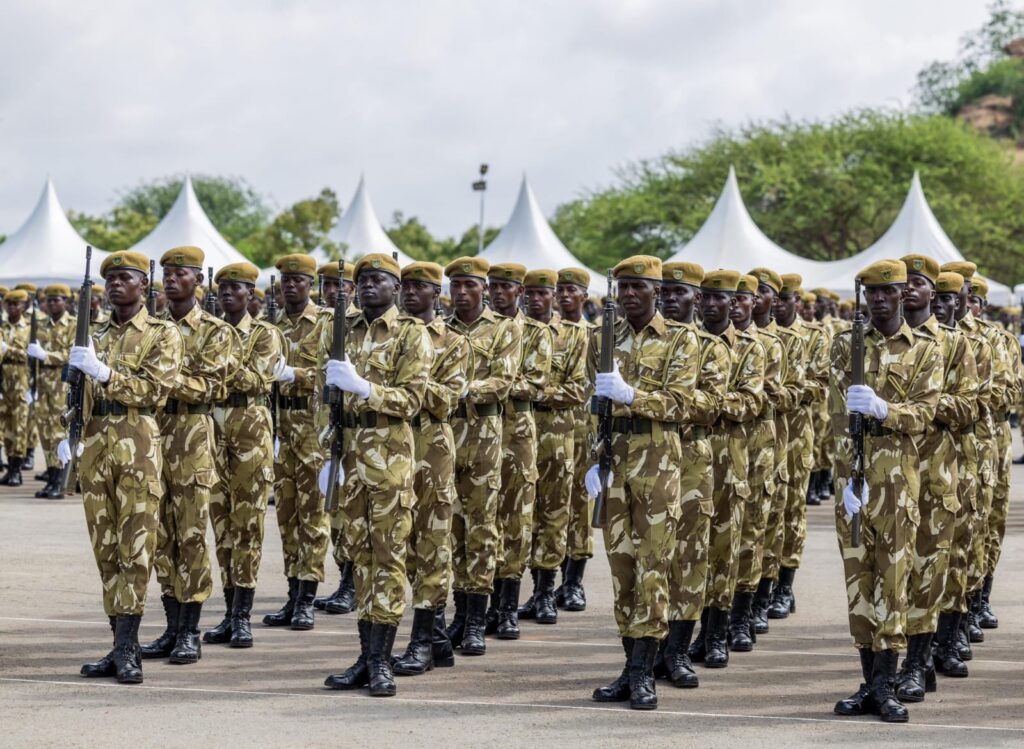
Addressing the pass-out parade of 147 Kenya Wildlife Service (KWS) cadet officers and 103 junior officers at the KWS Law Enforcement Academy on Friday, December 19, 2025, Prof Kindiki said the new facility will strengthen intelligence-led investigations and prosecutions, while enhancing regional and international cooperation against wildlife trafficking.

He said the government is rolling out a technology-driven conservation and security framework designed to protect wildlife, grow tourism and safeguard community livelihoods, noting that the graduation marked a new chapter for Kenya’s conservation sector.
“This ceremony signifies a generational shift. You are entering service at a time when conservation demands new skills, discipline and innovation to address evolving threats to wildlife and national security,” the Deputy President told the graduating officers.
Prof Kindiki said the government has, over the past three years, undertaken wide-ranging reforms in the wildlife sector, anchored on science, technology and the involvement of local communities.
He noted that Kenya’s rich wildlife endowment remains central to the country’s identity and economic wellbeing, adding that reforms at KWS have already yielded measurable results.
Automation of park revenue collection, he said, has nearly doubled earnings from Sh4 billion in 2022 to close to Sh8 billion last year, with projections of Sh11 billion this year.
The Deputy President said improved conservation outcomes have supported a rebound in tourism, with foreign visitor arrivals increasing by about 500,000 in 2024 as key wildlife populations recover.
He directed the Ministry of Tourism and Wildlife and KWS to partner with all 47 county governments to operationalise national wildlife reserves under county jurisdiction that remain inactive, saying dormant facilities continue to deny counties and host communities jobs, income and foreign exchange.
On security, Prof Kindiki said KWS has strengthened protection through the deployment of elite ranger units, staff expansion and the adoption of modern surveillance systems, including artificial intelligence, drones, satellite-enabled patrols and upgraded digital communication networks.
“These interventions have strengthened rapid-response capacity and intelligence-based operations, positioning Kenya among global leaders in sustainable wildlife management,” he said.
He said tourism earnings staged a strong recovery in 2024, restoring global confidence in Kenya as a leading destination. The government, he added, is targeting five million visitors annually by 2027 through diversification into cultural tourism, sports, adventure, events and the meetings, incentives, conferences and exhibitions (MICE) segment.
“Tourism thrives where security and stability exist. Securing our parks safeguards the economy, and when conservation benefits communities, the entire country gains,” he said.
Prof Kindiki said wildlife conservation remains a matter of national sovereignty and a key economic pillar, stressing that the government has increased investment in community livelihoods, public awareness and digital service delivery. He cited the integration of KWS services into the eCitizen platform as a major step towards transparency and efficiency.
Restoring ecological connectivity, he said, is a central component of the new strategy. He noted that Cabinet has approved the Nairobi National Park–Kapiti Wildlife Corridor to reconnect the park with its traditional dispersal areas, while similar corridors around Lake Elementaita and Lake Nakuru are nearing implementation.
The Deputy President also announced the expansion of the Tsavo West Rhino Sanctuary from 92 square kilometres to 3,200 square kilometres, making it the largest rhino sanctuary globally. He said the expansion will support the recovery of endangered black rhinos by restoring access to their historical range.
In addition, the government is developing a National Wildlife Protection and Anti-Poaching Modernisation Framework, which will integrate elite ranger units, advanced surveillance technologies and a central command-and-control system across protected areas.
On ranger welfare, Prof Kindiki said plans are underway to recruit 1,500 more officers, enhance training, improve housing in remote and high-risk stations and strengthen legal safeguards for rangers on duty.
“Those tasked with protecting our wildlife will be fully protected by the law, and any attacks on them will be met with decisive action,” he said.
He added that sustainable financing remains a priority, with the government exploring green financing, climate funds, carbon markets such as REDD+, conservation bonds and public–private partnerships to ease pressure on public finances while expanding eco-tourism and community enterprises.
Addressing human–wildlife conflict, the Deputy President said mitigation efforts will be guided by science, early-warning systems and timely compensation, underpinned by strong partnerships with affected communities.
“As you begin your service, you represent the future of conservation in this country. Serve with integrity and courage, and protect a heritage that defines our nation,” he said.
The event was attended by Tourism and Wildlife Cabinet Secretary Rebecca Miano, KWS Director-General Prof Erastus Kanga, Taita Taveta Governor Andrew Mwadime, legislators, conservation experts and other stakeholders.
