


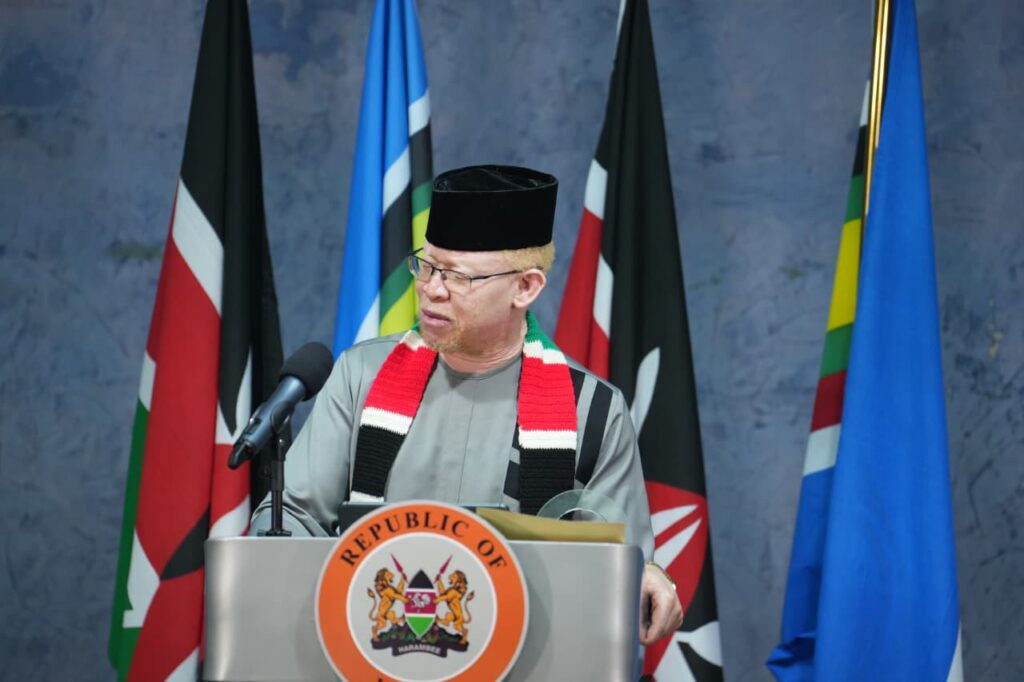
The government says Kenya is firmly on course towards sustained economic growth, driven by large-scale job creation, disciplined fiscal reforms and a new financing model for infrastructure development under the Bottom-Up Economic Transformation Agenda (BETA).
Government Spokesperson Hon. Isaac Mwaura says the country has successfully transitioned from an economic recovery phase into one of stability and accelerated growth, citing improved macroeconomic indicators and expanded citizen participation in the economy.
Dr. Mwaura said more than two million jobs have been created nationwide across key sectors, attributing the gains to targeted interventions under the BETA framework. He noted that the affordable housing programme alone has generated over 420,000 direct and indirect jobs, with the capacity to support up to one million workers as projects scale up across the country.
“Two million of our youth are currently working, some abroad, some online, some at the affordable housing sites. There was a bit of a challenge initially, but you can see it’s going on well,” said Mwaura.
He added that reforms in agriculture and agri-value chains, including fertiliser subsidies, have created thousands of rural jobs while strengthening food security and improving farmer incomes. The formalisation of over three million micro, small and medium enterprises, coupled with increased access to affordable credit, has also sustained and created hundreds of thousands of jobs in trade, services and light manufacturing.
“The government has successfully shifted policy from consumption subsidies to production-led support, delivering tangible gains in food security. Over 7.1 million farmers are now digitally registered, eliminating cartels and brokers in the distribution of farm inputs,” Mwaura said.
Dr. Mwaura further said the digital economy and online work platforms are opening income opportunities for hundreds of thousands of young people, while continued investment in infrastructure, urban regeneration and climate-related public works remains a key driver of employment across the country.
On infrastructure financing, the spokesperson announced the establishment of the National Infrastructure Fund (NIF), describing it as a strategic and historic shift in how Kenya finances large-scale development projects. He said the Fund is designed to deliver high-impact national infrastructure without increasing the country’s debt burden.
According to Dr. Mwaura, the NIF will mobilise domestic resources and private capital, including pension and institutional funds, to invest in priority sectors such as transport, energy, water, food security, logistics and the digital economy. He said the Fund will operate with strict fiscal discipline, reduce reliance on external borrowing and promote intergenerational equity, while accelerating economic growth.
He explained that the new model will rely on the strategic sale of mature public assets, ring-fencing of privatisation proceeds, mobilisation of domestic savings and expanded participation through capital markets, allowing the government to shift from debt-financed development to a sustainable, investment-driven approach.
“The NIF is going to get money from divestment of public companies and investments, while the sovereign wealth fund is going to get money from our minerals and resources, and the idea is to get Sh5 trillion. That’s not a lot of money, considering it’s for development only,” Mwaura stated.
Dr. Mwaura said Kenya is also deliberately transitioning from a “Third World” economy characterised by exclusion and informality to a “First World” economy anchored in productivity, inclusion and global competitiveness. He noted that the transformation is being driven by expanded access to capital, skills development, modern infrastructure and digital government services, enabling ordinary citizens to actively participate in economic growth.
“Kenya is deliberately moving from a third world economy to a first world economy anchored in economic freedom, productivity and shared opportunities. The Bottom-Up Economic Transformation Agenda is the vehicle for this shift, expanding access to capital markets, skills and modern systems for millions,” Mwaura said.
He cited improving economic indicators as evidence of the country’s stabilisation, noting that inflation has declined from 9.6 per cent to 4.6 per cent, easing pressure on household purchasing power. He added that the Kenya shilling has remained stable against the US dollar, supported by increased exports and record diaspora remittances amounting to Sh638 billion in the last financial year, now the leading source of foreign exchange.
Dr. Mwaura said the reforms implemented over the past year have laid a strong foundation for inclusive, citizen-centred growth, adding that the government remains focused on raising household incomes, strengthening institutions and securing long-term prosperity for all Kenyans through disciplined and accountable implementation.
He added that Kenya’s long-term vision is to achieve development standards comparable to countries such as Singapore, as outlined by President William Ruto, noting that the President is focused on delivering his agenda within the constitutionally mandated term.
