



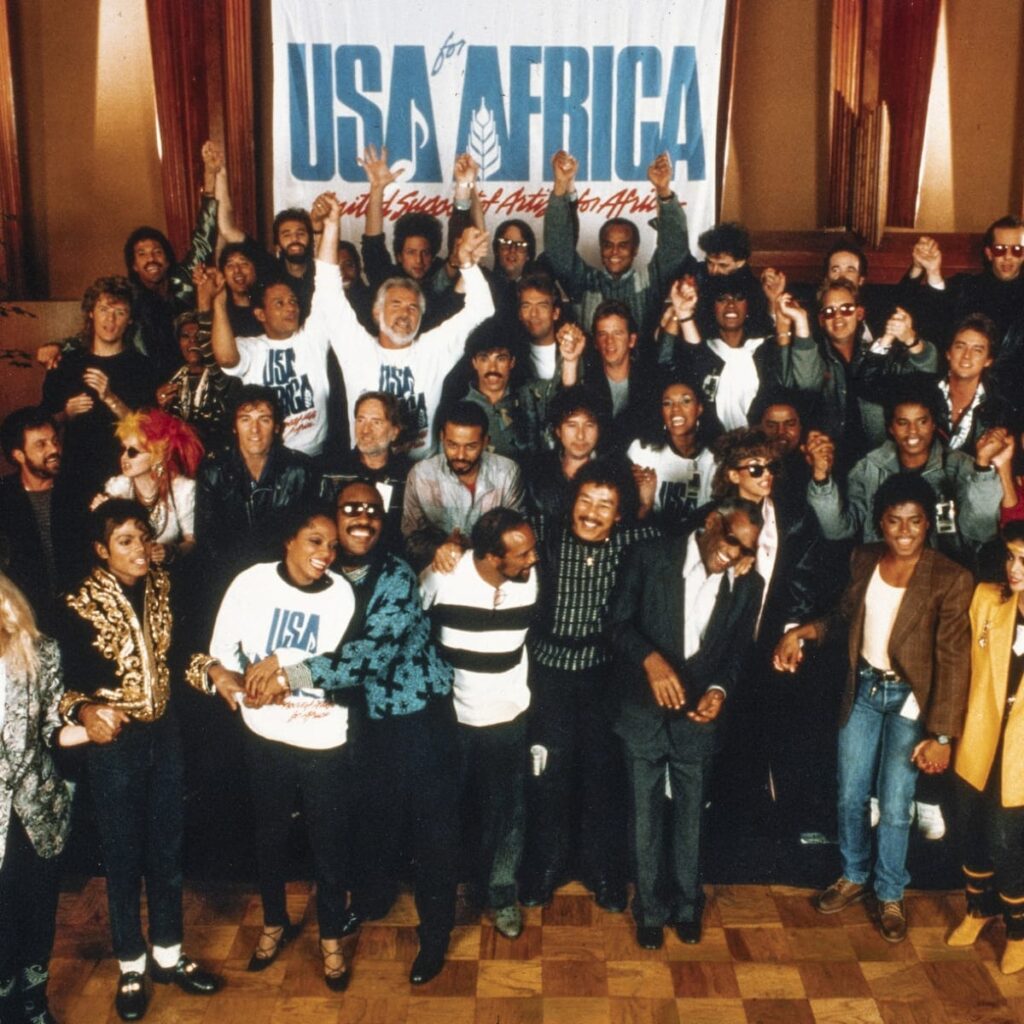
As Christmas ushers in a season of giving, reflection and shared humanity, the familiar refrain of We Are the World feels as relevant today as it did four decades ago. The 1985 anthem is often remembered for its star power the soaring vocals of Michael Jackson, Cindy Lauper, Bruce Springsteen , Diana Rose, Stevie Wonder and a chorus packed with global music icons. Yet behind the spotlight stood a quiet architect whose vision transformed music into a global act of compassion: Harry Belafonte.
Lionel Richie breaks the instrumentals beckoning the call for global giving , with the first line of the song :“There comes a time when we hear a certain call …” and the first duet of the composition is heard, “…when the world must come together as one…there are people dying “
It further goes on to ” …oh, and it’s time to lend a hand to life the greatest gift of us all …we can go on, pretending day by day that someone somewhere will soon make a change…we are all apart of God great big family and the truth you know love is all we need,”
Oh! Tina Turner turns it over before the refrain .
Back to the think tank , Belafonte .
Belafonte the legendary balladeer admired by veteran Kenyan opposition leader , the late Raila Odinga was not chasing applause. He was mobilising conscience. Now known in Kenya and highly searched for the song- “Jamaica farewell” -Raila’s favorite song.
In 1984, as harrowing images of famine in Ethiopia and Sudan shocked the world, Belafonte closely followed the success of the UK charity single Do They Know It’s Christmas? by Band Aid. While the song stirred international sympathy, Belafonte felt American artists, particularly Black artists with deep cultural and historical ties to Africa needed to lead their own humanitarian response.
He did not want symbolism. He wanted impact.

Drawing on a lifetime of activism, Belafonte enlisted veteran entertainment manager Ken Kragen to turn the idea into reality. Soon after, Lionel Richie and Michael Jackson were brought on to write the song, while producer Quincy Jones was tasked with shaping the historic recording.
On the night of January 28, 1985, inside A&M Studios in Los Angeles, Belafonte stood not at the centre of attention but among the chorus a participant in the movement he had ignited. The recording session brought together 45 of the world’s biggest music stars, united by a single instruction famously posted by Quincy Jones: “Leave your ego at the door.”
During a break in the session, the mood shifted when the artists spontaneously broke into Day-O (The Banana Boat Song) Belafonte’s signature hit led by Al Jarreau and joined by Michael Jackson, Stevie Wonder and others. It was an unscripted tribute, reflecting the respect the room held for the man who had brought them together.
Released in March 1985, We Are the World raised more than $60 million for famine relief, funding food aid, health programmes and long-term development initiatives across Africa. Belafonte was deliberate in ensuring the focus remained on sustainable humanitarian support, not celebrity optics.
His philosophy was simple and consistent.
Speaking during a live performance linked to the song, Belafonte reminded audiences of shared responsibility:
“We are truly a remarkable species… We are the ones who will make the difference. We, humans, we’re really all brothers and sisters.” He added, “If this planet is to survive, it is we who are going to be responsible for helping it do so.”
Those words echo powerfully in Kenya, where Raila Odinga has repeatedly expressed admiration for Belafonte not only as a singer but as an artist whose music carried political courage, Pan-African consciousness and moral clarity. Belafonte’s lifelong commitment to civil rights, African liberation movements and social justice resonated deeply with leaders and activists across the continent.
Reflecting on the origins of the song, Belafonte was clear that the idea was born from solidarity, not fame. “If you give people a chance to sing, they will sing,” he said. The global response proved him right.
Belafonte’s role did not go unnoticed. In 1986, he received a special American Music Award of Appreciation for organising the project. Decades later, the 2024 documentary The Greatest Night in Pop reaffirmed his place as the moral anchor of that historic night.
Belafonte passed away in 2023 at the age of 96, but his legacy continues to resonate especially during Christmas, when the world is reminded of generosity beyond borders. We Are the World endures not simply as a song, but as a lesson: that art can be an instrument of empathy, and that leadership does not always require the loudest voice.
Sometimes, it takes a quiet balladeer admired from Nairobi to New York to remind the world that giving is humanity’s greatest gift.
That message was echoed in 2024 Christmas by Raila Odinga, who said the season was “a reminder of where we are coming from as a society and where we are growing a story of fortitude, bravery and care for the most vulnerable.”

The late Rila Odinga sharing christmas moment with children in an orphanage
Four decades on, the answer to Do They Know It’s Christmas? still lies in Belafonte’s enduring belief: when conscience leads, the world will sing and give together.
Merry Christmas! Make the world a better place. Let’s not stop giving.
