


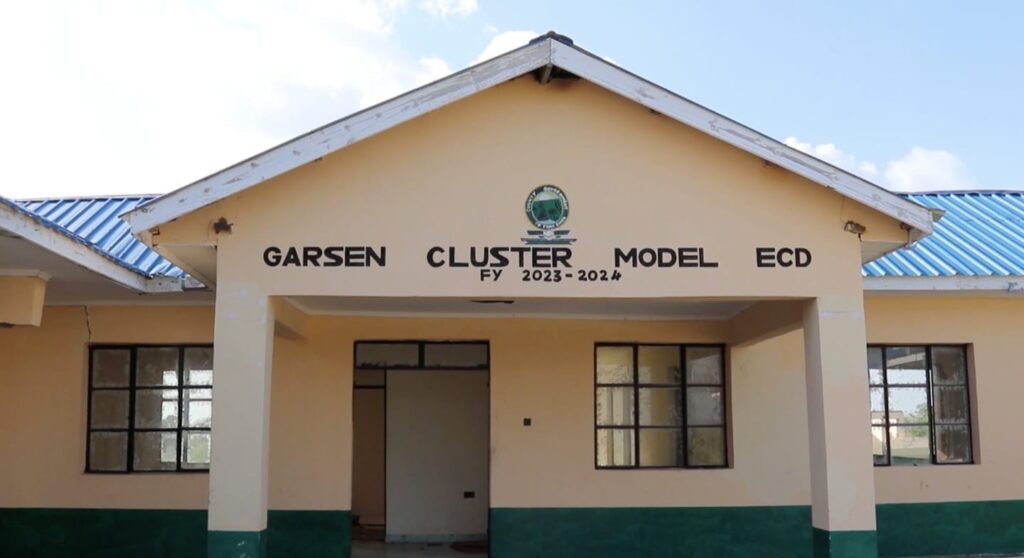
Built to protect and educate children displaced by the devastating 2023 El Niño floods, an Early Childhood Development (ECD) school in Garsen, Tana River County, remains unused months after its completion.
The facility, constructed at a cost of KSh 15 million in public funds, was intended to provide a safe learning environment for vulnerable children from flood-affected communities in Garsen West Ward. However, the classrooms are empty, doors remain shut, and the building is already showing signs of neglect.
Garsen West Ward Member of County Assembly Mahkud Gabo has questioned the management of the project, saying the full construction funds were reportedly disbursed despite the school never being operationalised.
“This project cost about 15 million shillings. The funds were reportedly fully disbursed, yet the school has been abandoned and is not serving the community,” Gabo said.
The idle facility has sparked outrage among residents and raised concerns over accountability in the use of public resources. Parents say the failure to open the school has forced them to take their children long distances to access ECD services, exposing them to safety risks along busy roads.
One parent, Grace Hadida, said young children are forced to travel to Garsen town, navigating dangerous roads shared with vehicles and motorbikes.
“Our children are struggling. Some have to go all the way to Garsen, which is far and risky. There are vehicles and motorbikes, and sometimes children get into accidents or fall and get injured on the road,” she said.
She added that the situation is particularly worrying for young and female learners, noting that parents are often forced to personally escort their children to and from school.
“These are small children. You cannot let them go alone. You must take them and pick them up. We are facing many challenges in education. If we had a school nearby, it would help us greatly,” she added.
As frustration grows, residents are demanding answers from county authorities on why a fully built ECD facility remains unused, even as children continue to bear the cost of delayed education services.
