


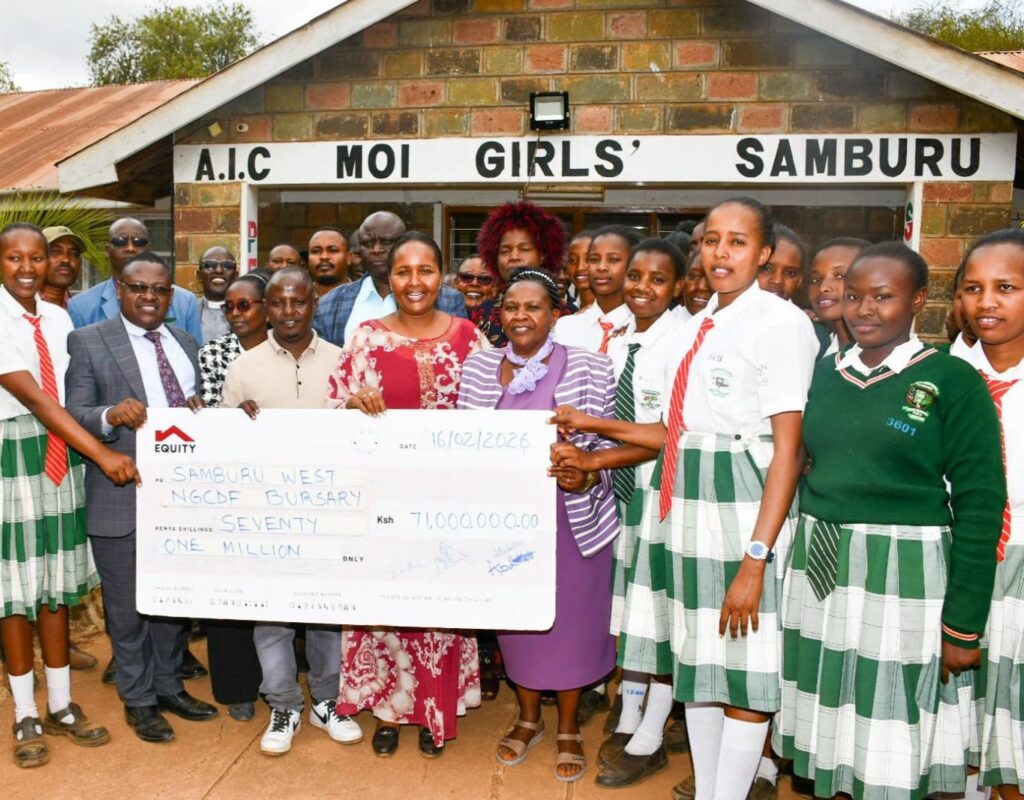
Thousands of students in Samburu West are set to remain in school after a Ksh 71 million bursary disbursement under the National Government Constituencies Development Fund (NG-CDF), offering relief to families grappling with prolonged drought.
The bursary, patronized by Samburu West MP Naisula Lesuuda, comes at a critical time when dry conditions have devastated livestock — the backbone of household incomes in the constituency — leaving many parents struggling to raise school fees.
More than 10,000 applications were submitted for consideration, underscoring the scale of financial distress among families determined to keep their children in class despite worsening economic strain.
“We launched 71 million and it is coming in handy especially now that Samburu County including Samburu West is one of the areas that is hit by drought,” she said, noting that the programme targets families most affected by the dry spell.
In Samburu West, where most households rely on pastoralism, weakened herds and falling livestock market prices have sharply reduced income flows. For many families, education costs have become increasingly difficult to meet.
“We know that the parents rely on livestock farming and right now we can see that even the market price has gone down and so it will come in handy to see that we keep our children in school,” she added.
For students, the bursary represents more than financial support, it is protection against interrupted learning, absenteeism, and potential dropouts.
Education stakeholders across the constituency say the funds have become a critical buffer for schools already feeling the ripple effects of climate change.
Dr. Alice Gituro, Principal of AIC Moi Girls Samburu, described the intervention as a lifeline for vulnerable learners.
“It has really helped our students keeping them in school, especially at this time when the weather is very dry, the parents are suffering, they are struggling,” Dr. Gituro said.
School administrators note that during prolonged drought seasons, fee arrears typically rise as families prioritize food, water, and livestock survival. Without intervention, many learners risk missing classes or being sent home, disrupting academic progress and affecting national examination performance.
The bursary aims to cushion such disruptions, ensuring students remain focused on their studies despite economic shocks at home.
Hon. Lesuuda has been at the forefront in defending the NG-CDF as a critical grassroots development tool, consistently backing its role in improving access to education and accelerating community-based projects.
