


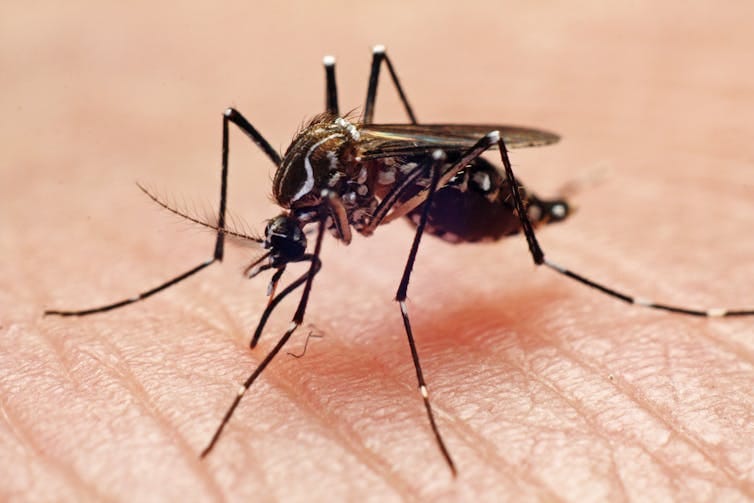
If you’re the person who always ends up covered in itchy welts while your friends walk away bite-free, science may finally have an explanation and it has everything to do with your lifestyle choices at festivals. And parties.
A team of scientists led by Sara Lynn Blanken and Felix Hol took their research out of the lab and into the buzzing atmosphere of the 2023 Lowlands music and arts festival in the Netherlands. Their mission? To solve the mystery of why some people are irresistible to mosquitoes while others seem immune.
For three days, nearly 500 volunteers lined up at a pop-up “Mosquito Magnet Trial” housed in shipping containers. Participants placed their arms against an acrylic box filled with female mosquitoes, while cameras captured every attempted landing. Each festivalgoer walked away with a personal “attractiveness score” and, in turn, contributed valuable data to the largest study of its kind.
Booze, Beds, and Bug Bites
The results painted a picture: hedonistic habits appear to make humans more appealing to the bloodsuckers. Beer drinkers were 35% more attractive to mosquitoes than those who abstained, echoing findings from smaller studies in the past. Cannabis users also drew more insects, and those who had shared a bed the night before were 46% more attractive.
Interestingly, not all festival habits worked against participants. Those who skipped a morning shower or slathered on sunscreen were less attractive to mosquitoes, cutting their risk nearly in half. Researchers also noted that skin bacteria mattered individuals with higher levels of streptococci and other odor-related microbes proved particularly enticing.
“Mosquitoes seem to have a taste for the hedonists among us,” the researchers concluded.
Science Meets Festival Culture
The festival, which attracts around 65,000 attendees each year, has dedicated space for science projects alongside the music stages. For researchers, it provided a unique chance to recruit hundreds of participants in just days something traditional laboratory settings could never achieve.
Not Proof, But A Clue
Despite the fun setting and surprising results, the authors are quick to caution that the findings are correlations, not definitive proof. The study found a correlation between beer consumption and mosquito attraction but emphasized that it cannot be concluded that drinking beer directly causes increased mosquito attraction.
The researchers noted that confirming this would require further exploration of the underlying biological mechanisms, which was beyond the scope of the study. The work also debunked some long-standing assumptions, such as blood type influencing mosquito preference. No such link was found among the hundreds of festivalgoers tested.
What It Means for the Rest of Us
While the study may not immediately change public health policy, it highlights just how complex mosquito attraction really is and why some people feel perpetually targeted. With mosquito-borne diseases like malaria, dengue, and Zika still threatening millions globally, even lighthearted experiments like the Mosquito Magnet Trial can offer insights into how these insects choose their next meal.
The research, published as a preprint on bioRxiv and not yet peer-reviewed, is titled “Blood, sweat, and beers: investigating mosquito biting preferences amidst noise and intoxication in a cross-sectional cohort study at a large music festival” (DOI: 10.1101/2025.08.21.671470).
