


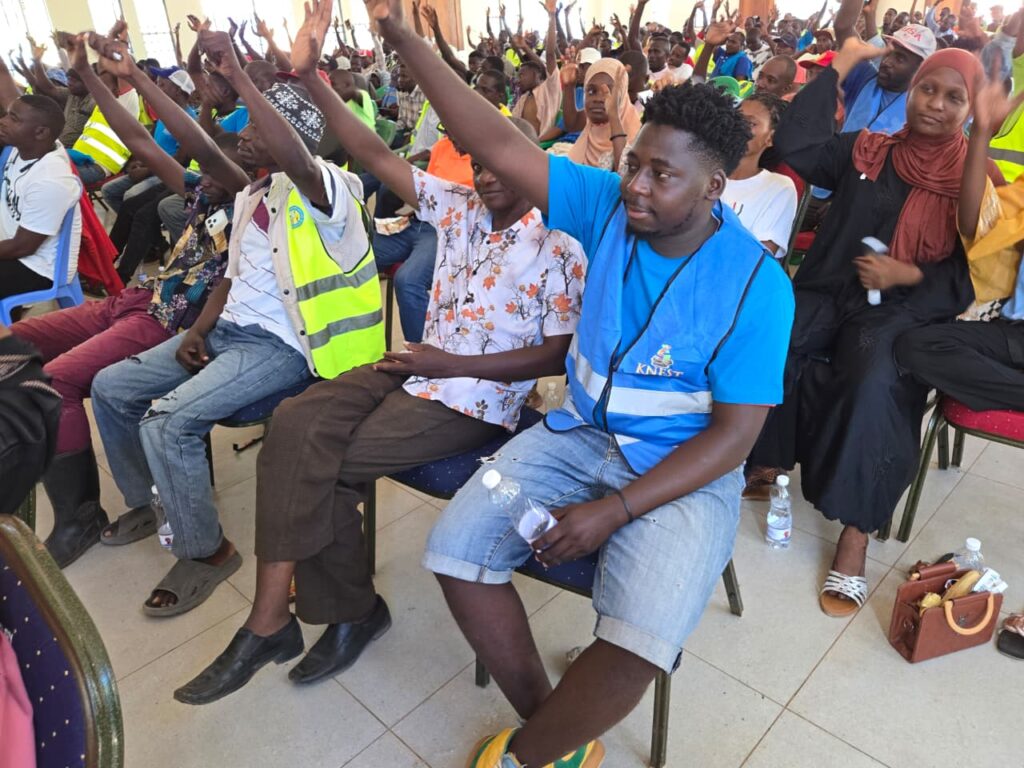
Small-scale traders and other informal sector workers have been urged to join the Kenya National Entrepreneurs Savings Trust (K-NEST) to help them plan and save for retirement.
The call was made during a sensitisation meeting with boda boda operators in Kwale County, where K-NEST officials led by Chief Executive Officer Rose Kwena encouraged workers without fixed incomes to think about their future by investing in the scheme. They explained that the fund is designed to help informal sector workers access pension benefits once they retire or exit active employment.
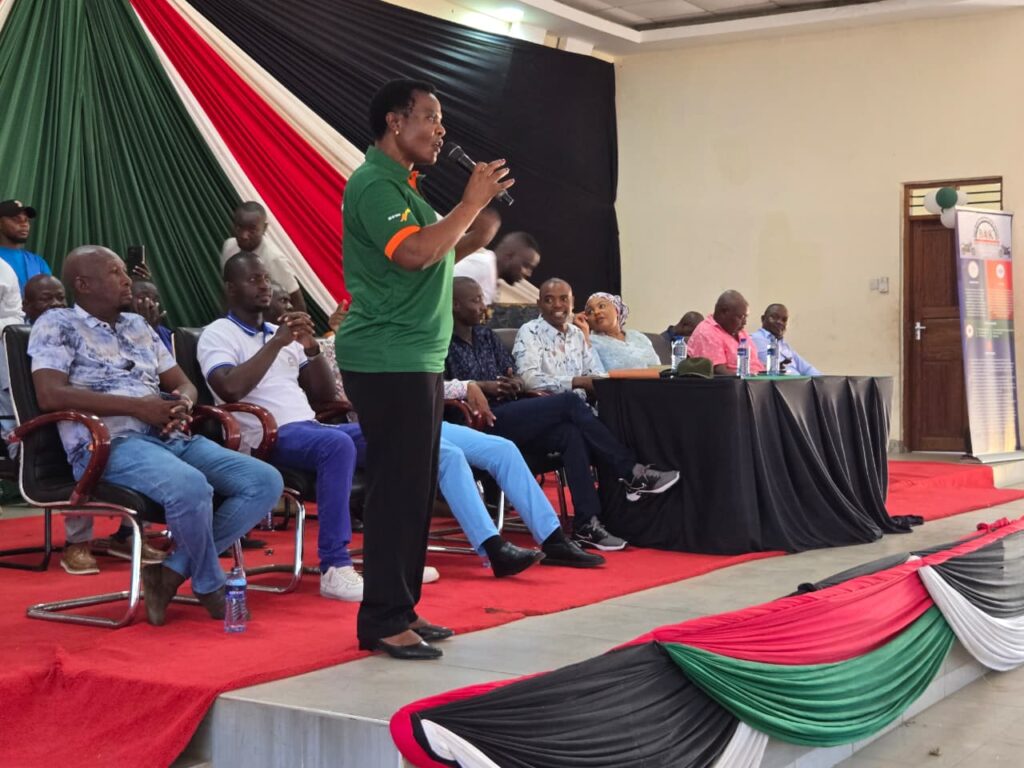
Kwena noted that about 83 per cent of Kenya’s workforce is self-employed and can live dignified lives while still active, but many fall into poverty once they are unable to work due to old age. She explained that a large number of informal workers do not save for retirement, leaving them financially vulnerable when their income stops.
As a result, many are forced to rely on government social protection programmes such as Inua Jamii to survive — a situation she said could be avoided through early and consistent saving during productive years.
“KNEST has been formed so that Kenyans can save for themselves while they are still active, so that when they are unable to work, their living standards do not deteriorate,” Kwena said.
Deputy Government Spokesperson Mwanaisha Chidzuga emphasised the importance of the scheme, noting that it offers informal workers an opportunity similar to that enjoyed by formally employed Kenyans who save through the National Social Security Fund (NSSF).
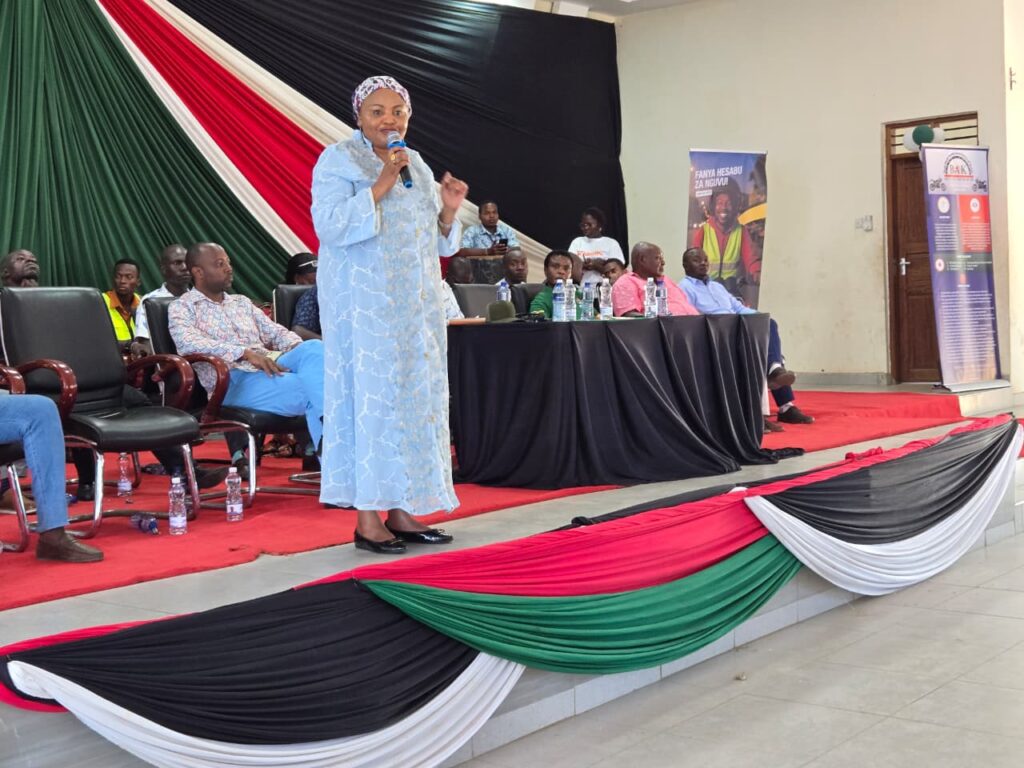
She explained that contributors under K-NEST can invest any amount at any time, depending on their financial ability.
“As a government, we have realised that there are many people in the informal sector who want to save but do not have a specific platform to do so. That is why we have brought K-NEST,” said Chidzuga.
She further highlighted a key difference between K-NEST and NSSF, stating that while NSSF savings are largely accessed upon retirement, K-NEST allows investors to withdraw up to 30 per cent of their savings at any time.
“For NSSF, you had to wait until retirement to access your savings. The advantage of K-NEST is that you can access 30 per cent at any time in case of emergencies,” she noted.
Boda Boda Association of Kenya President Kevin Mubadi urged riders to embrace the scheme, saying the sector stands to benefit significantly. He noted that for many years, boda boda operators have been forced to continue working into old age due to the lack of structured retirement plans.
“Boda boda riders can ride even into their 60s, when they should be relaxing with their grandchildren, simply because they did not save. With K-NEST, that will be a thing of the past. Once you hit 60, you can go home and start enjoying time with your grandkids,” Mubadi said.
Mubadi also called on riders to acquire proper road safety training and valid riding licences to help reduce road accidents linked to inadequate knowledge of traffic rules.
“If you want to be a doctor, you must be certified. If you want to be a pilot, you must be certified. Why should the boda boda industry be treated as the only place where you can just hop in without qualifications? Riders must go to driving schools and get licences so they are skilled in traffic rules and reduce accidents,” he said.
K-NEST plans to roll out sensitisation programmes across the country, with Kwale County serving as the pilot, as part of efforts to increase awareness and registration. Members of the public can enrol through the *254# platform and start saving with contributions from as low as Sh50.
“This Kwale exercise is just a pilot. We will go across the country with campaigns to ensure all Kenyans know that saving for the future is not only for the formally employed,” Chidzuga assured.
