


Agriculture and Livestock Development Cabinet Secretary, Sen. Mutahi Kagwe, has unveiled a series of government interventions aimed at boosting Kenya’s agricultural export sector, anchored in the Finance Bill 2026, which is set to be tabled in Parliament in March. The measures are expected to unlock reinvestment, protect jobs, and restore confidence among exporters.
Speaking during the official launch of Flamingo Group Investments’ (FGI) Expansion Project in Naivasha, Kagwe emphasized that the reforms target long-standing challenges in the sector, including delayed VAT refunds, high levies, and rising logistics costs.
“We are fixing the exporter ecosystem deliberately and permanently. The Finance Bill 2026 will ensure that exporters of agricultural produce are competitive, liquid and able to reinvest in Kenya,” Kagwe said.
According to the Cabinet Secretary, the Finance Bill 2026 will introduce several targeted tax and regulatory measures for agricultural exporters. Input VAT will be reduced from 16% to 8%, excise duty and export promotion levies on packaging materials, including kraft paper, will be removed, and VAT refunds will be offset more quickly against future tax obligations. Long-standing 100% exporters will enjoy special treatment to operate like EPZs and SEZs, with VAT eliminated on local purchases, while regulatory levies will be rationalised. The government also plans to expand air freight capacity through Kenya Airways and new international carriers, including Turkish Airlines.
The reforms are expected to free up billions of shillings in stalled capital, accelerating reinvestment across horticulture, tea, coffee, fresh produce, and livestock value chains.
Flamingo Group simultaneously launched a KSh 2 billion expansion programme, which will involve annual investments of KSh 644 million over the next three years, the creation of 500 direct jobs, and expanded production of value-added bouquets for export to Europe and the UK.
Flamingo Horticulture Kenya currently employs over 12,000 people directly and supports 6,000 additional jobs in its supply chain, exporting more than 750 million flower stems annually. Kenya exports an estimated six million roses daily, making the flower industry one of the country’s top foreign exchange earners.
Acknowledging the persistent VAT refund backlog, Kagwe cited Flamingo’s outstanding KSh 1.8 billion, confirming that KSh 470 million has already been paid, with further disbursements planned.
“These refunds are not losses to government. They are reinvestment capital for farms, jobs and technology,” he said.
Reinforcing the commitment to reforms, Principal Secretary for Investment Promotion, Mr. Abubakar Hassan Abubakar, highlighted the government’s efforts to remove bottlenecks affecting investor confidence.
“Kenya’s competitiveness depends on how fast we convert policy into action. Exporters are central to our growth story, and we will support them,” Abubakar said.
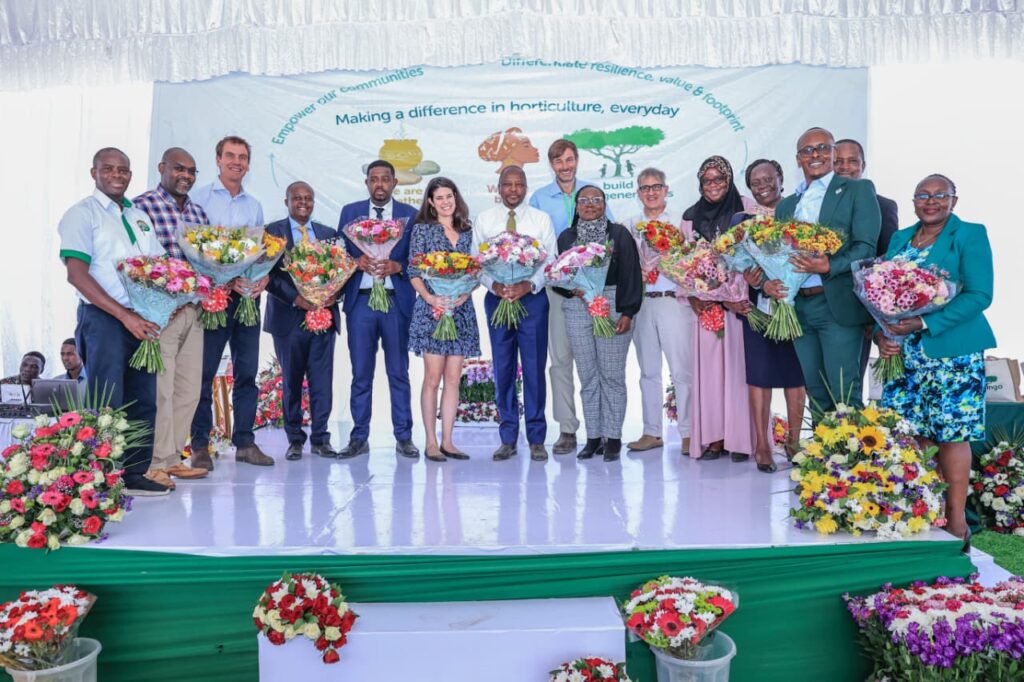
The event brought together senior government officials, regulators, industry leaders, and diplomats, including the Acting British High Commissioner, His Majesty’s Trade Commissioner, Invest Kenya leadership, KEPHIS, KEPROBA, and exporter associations.
Kagwe noted that Flamingo’s investment reflects the success of the government’s reform agenda under the Bottom-Up Economic Transformation Agenda, which positions agriculture as a modern, export-driven industry.
“When exporters reinvest in Kenya, communities grow, jobs multiply, and the economy strengthens. That is the Kenya we are building,” he said.
With the Finance Bill 2026 scheduled for parliamentary debate in March, the government anticipates that these interventions will accelerate rural industrialisation and reinforce Kenya’s status as Africa’s horticultural powerhouse.
