


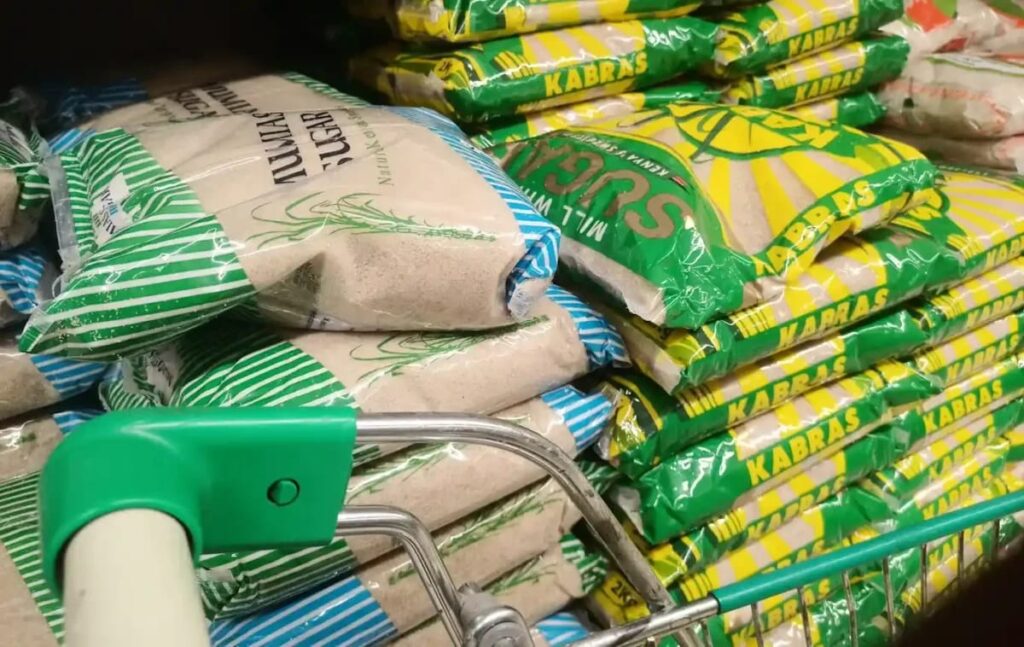
The Kenya Sugar Board (KSB) has assured consumers that sugar supply in the country remains stable despite production challenges that have affected output since 2025.
Recent data from the Kenya National Bureau of Statistics (KNBS) raised concerns over potential price increases in shops and supermarkets, prompting the regulator to reassure Kenyans.
“We wish to assure Kenyans that there is no cause for panic and they can continue buying sugar with confidence,” said Jude Chesire, CEO of KSB.
Kenya’s sugar supply continues to meet demand, despite rising consumption driven by population growth, urbanisation, and industrial use. In 2025, national sugar production stood at 613,000 metric tonnes, meeting just 61 percent of the country’s demand of 1.2 million tonnes. This was a drop from the historic 815,000 tonnes recorded in 2024, reflecting a 25% decline that was expected as the industry entered a major reform phase.
Chesire explained that the reduced output was due to a combination of factors, including weather stress, structural reforms, and deliberate protection of future cane.
“Much of the mature cane was harvested in 2024, so in 2025 a significant portion was still in developmental stages and could not be harvested. This led to the temporary closure of seven sugar factories in Lower and Upper Western regions to allow the cane to reach optimal maturity, ensuring higher sucrose content and protecting farmers’ future earnings,” he said.
The sector also underwent major private sector transitions and factory rehabilitation. Four state-owned mills were leased to private investors and underwent renovations worth KSh 12.5 billion, temporarily reducing milling capacity. Kwale Sugar also remained non-operational during this period.
“While these measures temporarily limited output, they were essential to modernise the industry and secure reliable production for the future,” Chesire said.
The sector was further affected by dry spells in late 2025 and early 2026, which slowed cane growth and reduced yields. However, the reforms and recovery programs are expected to mitigate such impacts in the coming seasons.
KSB has put in place market stabilisation measures to ensure that sugar remains available, prices are predictable, and consumers are protected from artificial shortages and speculation.
“Farmers remain at the centre of our recovery strategy. Cane maturity timelines are being respected, and programmes funded by the KSh 1.2 billion Sugar Development Levy will accelerate cane development, expand cultivation areas, and introduce early-maturing varieties,” Chesire said.
Millions of tonnes of cane are already in the ground, with harvesting and milling projected to resume strongly from October–November 2026. The sector is on track for a sustained rebound, positioning Kenya to meet growing domestic demand.
“The challenges of late 2025 and early 2026 are real, but they are temporary. The reforms are permanent. The assurance to Kenyans is clear: sugar supply will remain stable as the industry completes its recovery,” Chesire concluded.
