


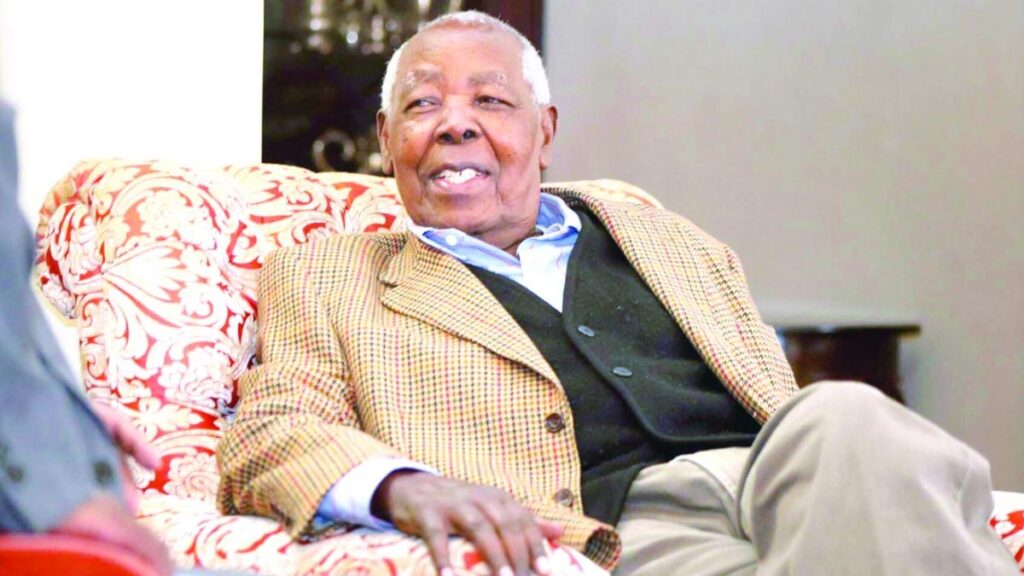
The estate of the late former Attorney General James Boro Karugu is at the center of a high-profile legal battle, this time with a sharp focus on alleged forgery, the conduct of lawyers, and possible attempts to influence Kenya’s justice system.
Karugu, who served as Kenya’s second Attorney General from 1980 to 1981, passed away in November 2022, leaving behind a multibillion-shilling estate spanning prime Nairobi real estate, business interests, and corporate shares, including holdings in Mathara Holdings Ltd. and associated subsidiaries co-founded with his late wife, Margaret Waithira Karugu.
While succession disputes are not uncommon in wealthy families, this case has drawn attention not for internal family disagreements alone, but for allegations that key lawyers and advisors attempted to manipulate legal processes to control the estate.
Central to the ongoing litigation is a Will and Settlement Trust Deed dated April 2, 2014, which investigators claim may have been fraudulently prepared. Private forensic examinations and the Directorate of Criminal Investigations (DCI) reportedly found that the documents’ authenticity could not be verified. By November 2025, the DCI submitted a file to the Office of the Director of Public Prosecutions (DPP), recommending charges including forgery, uttering false documents, and conspiracy to defraud.
Among the individuals under scrutiny is Peter Mbuthia Gachuhi, an advocate at the prominent law firm Kaplan & Stratton, who is alleged to have had custody of the disputed Will and delayed its submission for forensic verification. According to investigative reports, the original documents remained in the law firm’s custody for nearly three years, only being delivered to the DCI in January 2026, accompanied by one of Karugu’s relatives, Eric Mwaura Karugu.
Legal filings suggest Gachuhi, alongside other figures including Jane Kabiu, a former company secretary, and lawyer Kimani Richu, may have facilitated or concealed aspects of the alleged forgery. Investigators allege that some lawyers sought to block production of the original Will and to delay the arraignment of the suspects, raising concerns about the ability of powerful legal practitioners to influence criminal investigations.
In January 2026, the suspects obtained ex parte conservatory orders in Constitutional Petition No. E027 of 2026, temporarily restraining the DPP and DCI from proceeding with prosecutions. The petitioners argued that criminal proceedings could prejudice ongoing civil succession cases. Critics argue that the orders may have been used as a shield to protect those implicated from timely accountability.
“The involvement of senior advocates and law firms in obstructing or delaying investigations undermines the integrity of the process,” said Professor Alice Mwangi, a University of Nairobi law lecturer. “This case raises fundamental questions about influence, power, and access to justice in Kenya’s legal system.”
The Karugu estate dispute highlights the dual role of lawyers in Kenya: as custodians of justice and, at times, as potential influencers in high-stakes inheritance disputes. According to court filings, letters from Murgor & Murgor Advocates to the DCI and DPP accused senior lawyers representing the suspects of frustrating investigations. Allegedly, attempts were made in May 2025 to prevent the production of the original Will and to stop prosecutions in January 2026.
“The question is no longer just about inheritance,” said Lawyer Peter Kamau, an independent legal expert. “It’s about whether individuals with influence, including legal professionals, can obstruct investigations and manipulate judicial processes to serve personal interests.”
High Court rulings have, however, reinforced the independence of criminal inquiries. In May 2025, a judge dismissed attempts to halt criminal investigations, emphasizing that succession courts are not technically equipped to determine document forgery and must rely on forensic evidence from qualified investigators.
The high-profile nature of the dispute has drawn public scrutiny. Observers argue that the case demonstrates how wealth and legal connections can challenge the impartiality of investigative institutions. Delays in charging suspects and alleged interference by prominent lawyers have sparked debate about selective justice and elite influence.
“Kenya’s legal system is being tested,” said Mwangi, “to see if it can hold influential lawyers and professionals accountable without fear or favor.”
The focus on alleged forgery and lawyer conduct contrasts sharply with Karugu’s life and legacy. Celebrated for academic excellence and integrity, Karugu studied at Bowling Green State University in the U.S. and earned a law degree in the U.K. He was recognized internationally, including being named among Bowling Green’s top 100 alumni in 2010 and receiving a posthumous honorary doctorate in 2024.
Despite decades of public service and respect, Karugu’s name is now associated with legal controversy. Observers note that the unfolding saga could have long-term implications for estate law, forensic standards, and the conduct of lawyers in Kenya.
The resolution of the Karugu estate dispute will depend heavily on forensic verification, prosecutorial independence, and judicial oversight. While family members remain central to the case, much of the public attention focuses on how lawyers and legal institutions conduct themselves in high-value, high-profile disputes.
“The integrity of the justice system is at stake,” said Kamau. “This is a test of whether even those with powerful legal representation are held accountable, and whether the system can resist influence from well-connected actors.”
As proceedings continue, the estate of James Boro Karugu stands as a reminder that no matter the stature of an individual, legal and ethical accountability remains crucial. For investigators, judges, and the public, the case represents an opportunity to reinforce the principles of fairness, transparency, and the rule of law.
