


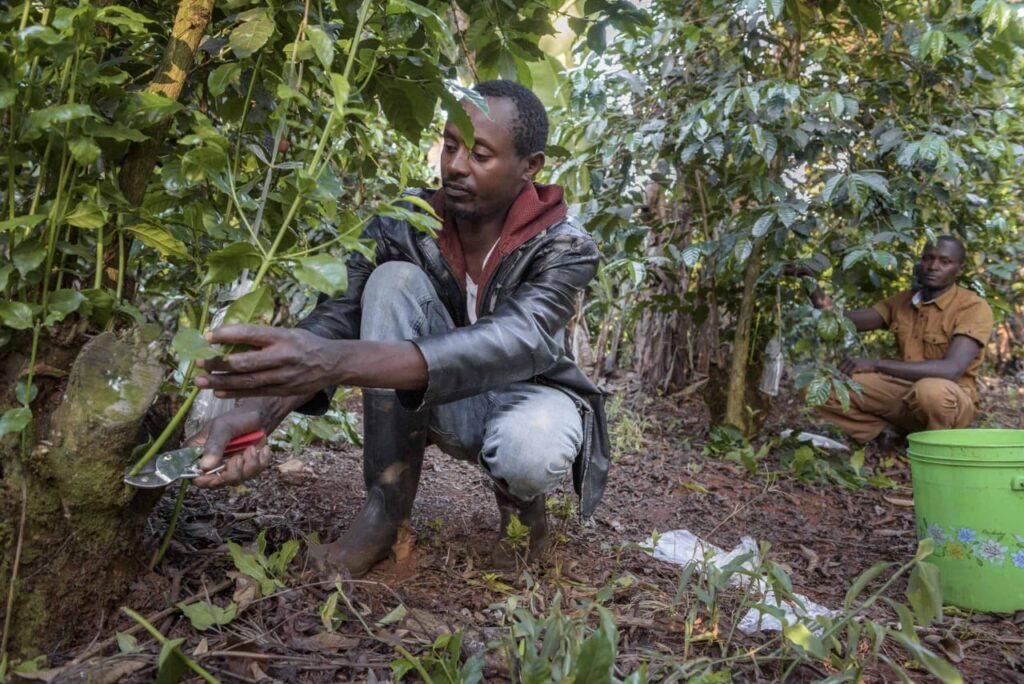
For years, Kananu Mugambi watched coffee farming decline in Miriga Mieru, Meru County, as frustrated farmers abandoned their trees and some even uprooted them.
But Mugambi, a coffee farmer and chairlady of Miriga Mieru Coffee Factory, says the crop that once sustained families in the region is too valuable to give up on.
“Earlier in the years coffee farming had deteriorated, however we haven’t given up. We have strived to make the farming thrive. Some of us even burnt the coffee bushes. Coffee is valuable,” she said.
Mugambi is now urging farmers to embrace the crop again and involve young people in coffee farming to secure the sector’s future.
“I want to tell the farmers let us embrace coffee farming so that we can feed our families and educate the children. Not only coffee farming, this is a productive district we can produce avocados and bananas which are key cash crops,” she added.
Her call comes as President William Ruto signed the Coffee Act, a move the government says will introduce reforms aimed at reviving Kenya’s struggling coffee sector and improving returns for farmers.
Stakeholders in Meru say the reforms come at a critical time when production has declined sharply and most coffee farmers are ageing.
Meru coffee farmers, most of whom are elderly, have been urged to subdivide their land and involve young people in coffee farming to secure the future of the sector, as the government rolls out reforms following the enactment of the Coffee Act, 2023.
President William Ruto on Friday signed the law, introducing reforms aimed at restructuring and revitalising Kenya’s coffee industry. The legislation shifts key regulatory and development roles in the sector from the Agriculture and Food Authority (AFA) to the Coffee Board of Kenya, in a move intended to streamline management of the industry and improve returns to farmers.
Stakeholders in Meru said the reforms come at a critical time when production has declined and the majority of coffee farmers are ageing.
They urged farmers to allow younger generations to participate more actively in coffee farming to sustain the sector.
Muge Muriki, Deputy Director of the New Kenya Planters Cooperative Union (New KPCU), said the coffee revival programme will distribute more than 1.5 million seedlings to farmers in Meru.
He said hundreds of youths from Tharaka Nithi and Meru counties are currently being trained at the Coffee Research Institute on coffee cultivation, mapping farms and improving farmers’ incomes.
Muriki added that the Agricultural Food Authority (AFA) has registered 95 percent of coffee farmers in the county to streamline farmer data and enhance compliance within the sector.
He noted that Kenyan coffee continues to enjoy strong demand globally, making youth participation critical as new markets emerge and global demand rises.
Muriki said the government is also providing subsidised fertiliser and other farm inputs to reduce production costs and improve post-harvest handling.
“This initiative will rejuvenate abandoned farms, improve traditional farming methods, and ensure that farmers get the greatest value for their produce,” Muriki said.
Kananu Mugambi, chairlady of Miriga Mieru Farmers’ Factory, urged farmers to allocate land to young people interested in coffee farming.
“We thank New KPCU management for improving coffee farming. We are embracing coffee to secure our families’ future. Let us allocate land for youths to venture into farming,” she said.
Charles Mutwiri Mkarimu, a member of the Coffee Revitalisation Committee, said Meru farmers once produced up to 150,000 metric tonnes of coffee in the 1980s and 1990s, but output has since declined to about 40,000 metric tonnes.
“I am confident that with interventions from the Kenya Kwanza administration led by President William Ruto and Deputy Kithure Kindiki, production in the next three years will exceed 200,000 metric tonnes,” Mkarimu said.
He encouraged youths to join local coffee societies for training and access to seedlings, noting that coffee farming can be profitable.
According to Mkarimu, a farmer can earn up to Sh200,000 per month from planting 100 coffee seedlings on one acre, depending on productivity and market prices.
Ondilia Ndeti, Deputy County Commissioner, said authorities have been working with coffee factories to curb theft, reduce losses and sensitise farmers about the coffee revitalisation programme.
She said the government, under the Bottom Up Economic Transformation Agenda (BETA), is committed to improving coffee production to meet both domestic and international demand.
Jasper Muthoni, an agricultural officer in Meru County, said the county government under Governor Mutuma M’Ethingia is promoting the planting of Ruiri 11 coffee seedlings.
“One acre can accommodate 1,000 seedlings, generating sufficient income to support livelihoods,” he said.

What the Coffee Act means for farmers
The Coffee Act, 2023, introduces reforms aimed at reviving Kenya’s coffee sector.
Key changes include strengthening the Coffee Board of Kenya to regulate and promote the industry, streamlining licensing of sector players, and separating regulatory roles from commercial activities previously handled under the Agriculture and Food Authority.
The reforms are expected to improve transparency in coffee marketing, reduce cartel influence in the value chain, and enhance farmers’ earnings by ensuring more efficient management of the sector.
