


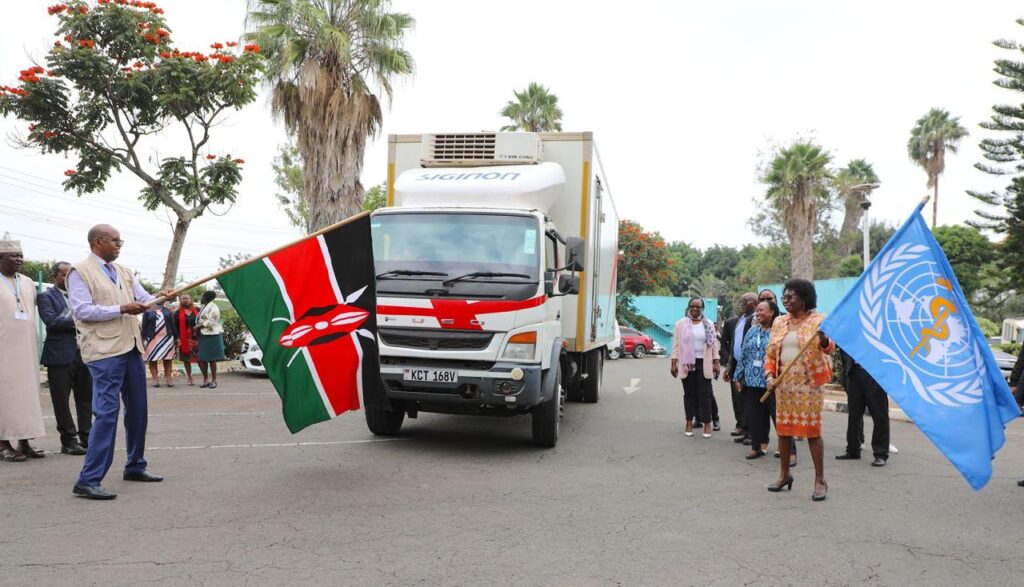
The Ministry of Health has received emergency health supplies from the World Health Organization to support response efforts amid ongoing floods triggered by the March–April–May long rains.
Speaking during the handover in Afya House, Secretary Administration, Adan Halakhe on behalf of Health Cabinet Secretary Aden Duale said the support comes at a critical time when floods have disrupted essential services and increased the risk of disease outbreaks.
“This contribution is not only a demonstration of solidarity with the people of Kenya but also a reflection of the strong and longstanding partnership between WHO and the Ministry of Health in safeguarding the health of our population,” said Halake .
The Ministry warned that flooding has created conditions conducive for the spread of water-borne and vector-borne diseases such as cholera and malaria, alongside increased cases of injuries and other health emergencies.
The ministry noted that the emergency kits, containing essential medicines, medical supplies and life-saving equipment, will “significantly strengthen our capacity to respond rapidly and effectively to the health needs of affected communities.”
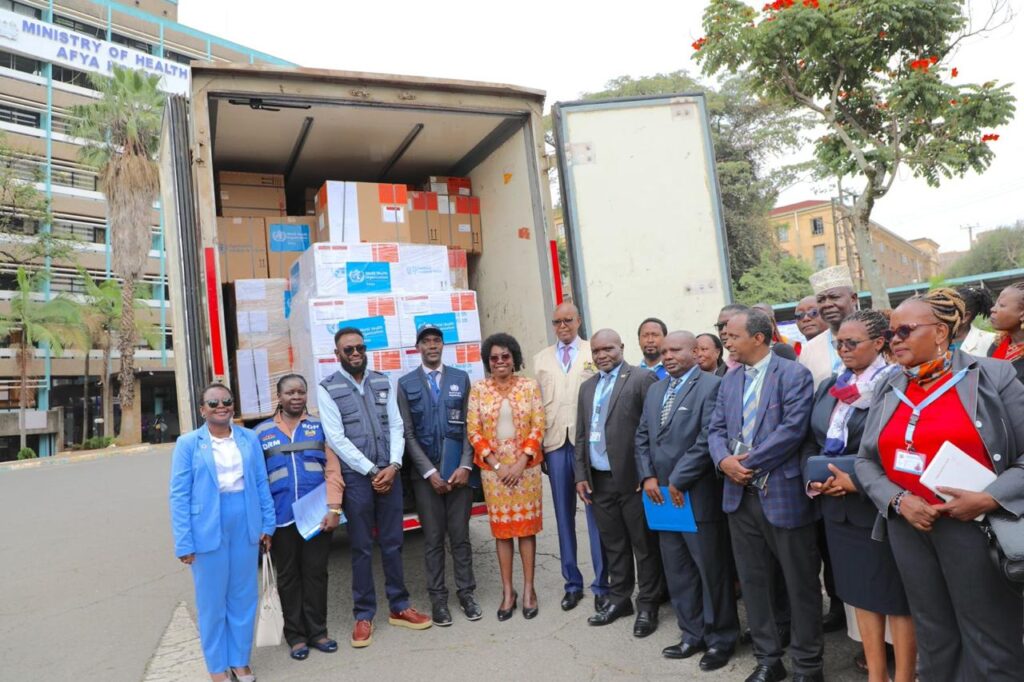
According to the World Health Organization, the scale of the disaster is already severe. According to the ministry of interior, 71 lives have been lost nationwide, 9people still missing, while 12,338 households have been displaced across 18 counties.
WHO Kenya Acting Representative Neema Rusibamayila Kimambo said, “Behind every number is a family, a community, and a story of loss. We stand with you during this difficult time.”
She added that floodwaters have contaminated water sources, damaged sanitation infrastructure and disrupted access to healthcare, placing vulnerable groups at heightened risk of disease.
The agency confirmed that the supplies handed over , including cholera management kits, rapid diagnostic tools, water treatment supplies and trauma kits—are expected to serve at least 5,000 people in the most affected areas.
Additional consignments currently at the port of Port of Mombasa are projected to support up to 100,000 people over the next three months.
WHO also praised the government’s response, noting that “the activation of response teams, the issuance of public health advisories, and ongoing disease surveillance reflect the strength and commitment of Kenya’s public health system.”
As the rains continue, the Ministry of Health is urging the public to maintain high hygiene standards, use safe water, sleep under treated mosquito nets, and seek medical care promptly when symptoms arise.
