


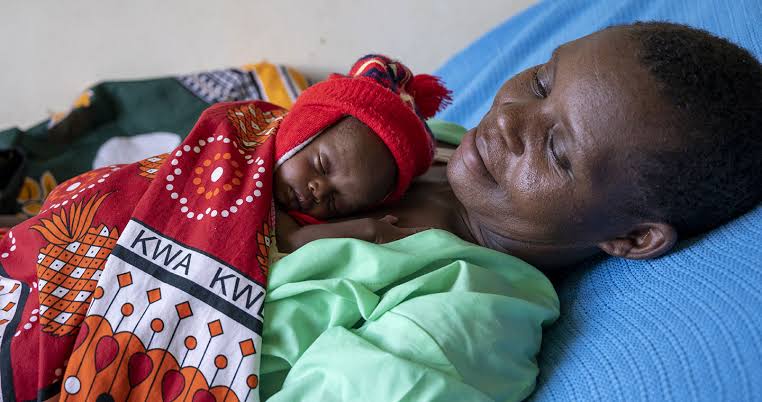
Africa has cut maternal deaths significantly over the past two decades, but the pace of improvement remains far below what is needed to meet the global 2030 target.
New evidence from the Africa Centres for Disease Control and Prevention shows that maternal mortality across African Union member states fell by 42 per cent between 2000 and 2023.
But at the current rate of progress, the continent could still record about 330 maternal deaths for every 100,000 live births by 2030 — almost five times the Sustainable Development Goal target of fewer than 70.
“At the observed annual rate of reduction of 2.4%, Member States will record approximately 330 deaths per 100,000 live births in 2030, close to five times the Sustainable Development Goal target,” Africa CDC says.
The warning comes as world leaders gather in New York for the 81st United Nations General Assembly, where maternal, newborn and child survival is among the health issues demanding renewed attention.
Africa’s burden remains particularly severe.
The Africa CDC review estimates that 178,600 women died from pregnancy and childbirth-related causes in AU member states in 2023 — about 69 per cent of the 260,000 maternal deaths estimated globally that year.
The continent is also home to a large share of newborn deaths, with AU member states accounting for an estimated 1.18 million newborn deaths annually, or about 51 per cent of the global total.
The new report, The Causes and Drivers of Maternal and Child Mortality in Africa, was released on September 9 and draws on evidence from all 55 AU member states.
It shows that the problem is not simply whether women reach health facilities.
Africa CDC identifies delays in receiving appropriate care, shortages of medicines and blood, inadequate staffing and weak referral systems among factors contributing to maternal deaths.
In countries where maternal deaths were assessed for preventability, between 58 and 96 per cent were estimated to have been avoidable.
The continent is also struggling to turn lessons from maternal death reviews into action.
Of 34 AU member states whose review reports were examined, only 14 reported progress in implementing recommendations from previous review cycles.
“Only one country both analyzed the three types of delay, assessed whether deaths were avoidable and tracked implementation of previous recommendations,” the report says.t
African leaders and global health partners are set to discuss ending preventable maternal and newborn deaths, closing immunisation gaps and ensuring every mother and child can access quality healthcare.Tanzanian President Samia Suluhu Hassan, the African Union Champion for Maternal and Child Health, will be represented by newly sworn-in Vice President Deogratius John Ndejembi, who will spearhead the conversation at a high-level UNGA 81 side event in New York on Wednesday 23rd September 2026
The regional differences are stark.
West Africa has the highest maternal mortality ratio at 682 deaths per 100,000 live births and accounts for about 55 per cent of maternal deaths in Africa.
Central Africa records 439 deaths per 100,000 live births, East Africa 260, Southern Africa 162 and North Africa 50.
Africa CDC says four of the continent’s five regions account for 99 per cent of maternal deaths.
The challenge extends beyond mothers.
United Nations estimates show that 4.9 million children died before their fifth birthday in 2024, including about 2.3 million newborns.
Sub-Saharan Africa accounted for 58 per cent of global under-five deaths.
UNICEF identifies complications linked to preterm birth and complications during labour and delivery among the leading causes of newborn deaths.
The World Health Organization estimates that 260,000 women died during or following pregnancy and childbirth in 2023, with about 182,000 of those deaths occurring in Sub-Saharan Africa.
WHO says skilled care before, during and after childbirth can prevent many maternal and newborn deaths.
The Africa CDC findings have placed health-system performance at the centre of the continental conversation.
The agency identifies sustainable financing, skilled health workers, primary healthcare, emergency referrals, essential medicines and commodities, reliable data and accountability as key areas requiring action.
Examples from countries including Tanzania and Rwanda show how improvements in financing, referral systems and quality of care can contribute to reducing maternal deaths, according to the review.
The issue is also being addressed through a broader push to strengthen primary healthcare.
At the Second International Primary Health Care Conference in Arusha, Tanzania, African health leaders adopted a Call for Action describing primary healthcare as the “delivery gateway” for the continent’s health and development ambitions.
Kenya is among the countries attempting to accelerate progress.
The Government has launched its Every Woman Every Newborn Everywhere Acceleration Plan for 2026–2028, targeting preventable maternal and newborn deaths in 26 high-burden counties.
It says about Sh12.5 billion is being invested in maternal and newborn health, including Sh4 billion for delivery and essential newborn care, Sh1 billion for lifesaving commodities and Sh2.5 billion for family-planning commodities.
The Government also plans to spend Sh5 billion annually on recruiting 5,000 nurses.
Principal Secretary for Medical Services Dr Ouma Oluga says maternal and newborn survival requires a whole-of-government response.
“The survival of mothers and newborns is a shared responsibility across government. Every sector has a role in addressing the barriers that prevent women and newborns from accessing timely and quality care,” Oluga said.
That is the central challenge confronting African health systems as the 2030 deadline approaches.
The continent has made progress. But the latest evidence shows that progress alone will not be enough unless the pace of reducing preventable deaths changes dramatically.
