


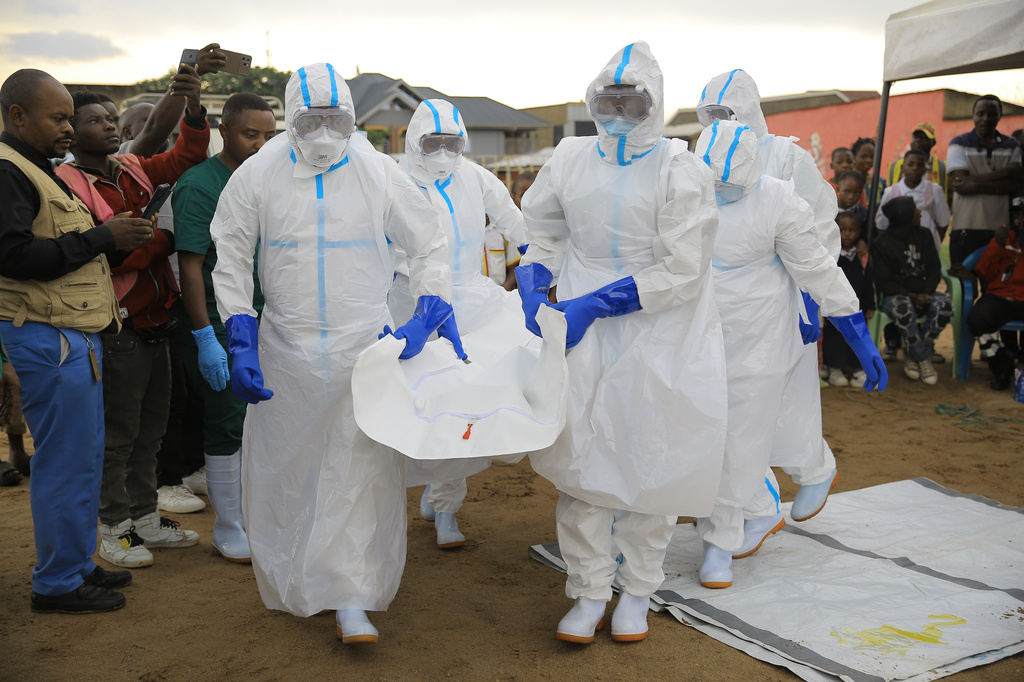
The World Health Organization (WHO) is bringing traditional healers, community leaders and private health providers into the Ebola response in the Democratic Republic of Congo (DRC), seeking to improve early detection as infections exceed 10,000 and deaths approach 5,000.
WHO Director-General Dr Tedros Adhanom Ghebreyesus said working with trusted community figures was opening new avenues for identifying suspected infections, particularly in areas where access to formal healthcare is limited.
“Engagement of private health service providers, traditional healers and community leaders into the response is opening up new opportunities to detect patients early,” Tedros said.
The move targets communities where people may first seek help from traditional healers or private providers before reaching formal health facilities, potentially delaying diagnosis and increasing the risk of further transmission.
Tedros said the outbreak had inflicted severe losses, with nearly half of those infected dying and some families losing several members.
“The devastation is immense,” he said, urging continued support for the government-led response and its partners in affected and high-risk areas.
Involving traditional healers and community leaders could help health teams identify people with suspected Ebola, encourage timely medical assessment, support contact tracing and communicate prevention measures in ways communities understand.
Their participation, however, does not replace medical care. People suspected of having Ebola need prompt referral to designated health facilities, while caregivers must follow strict infection prevention procedures to avoid exposure.
Despite the scale of the outbreak, Tedros pointed to progress in patient care, saying nearly 2,700 people had recovered and more than 1,000 were receiving clinical care.
Treatment capacity has also expanded to more than 2,100 beds across 109 Ebola transit and treatment centres, with health workers operating under protective measures.
Efforts to contain the outbreak remain complicated by insecurity, difficult terrain and mistrust, particularly in remote and conflict-affected communities where response teams face challenges reaching residents.
Rapid-response teams are being deployed to improve access to these areas, while scientific collaboration continues on potential vaccines and treatments targeting the Bundibugyo virus.
There is currently no approved vaccine specifically for Bundibugyo Ebola virus disease, although several clinical trials are underway with WHO and its partners.
Tedros said the gains made so far showed that ending the outbreak was possible, but warned against easing efforts before transmission was stopped.
“These efforts and progress give us more than hope, the outbreak can and will be brought under control and ended,” he said.
